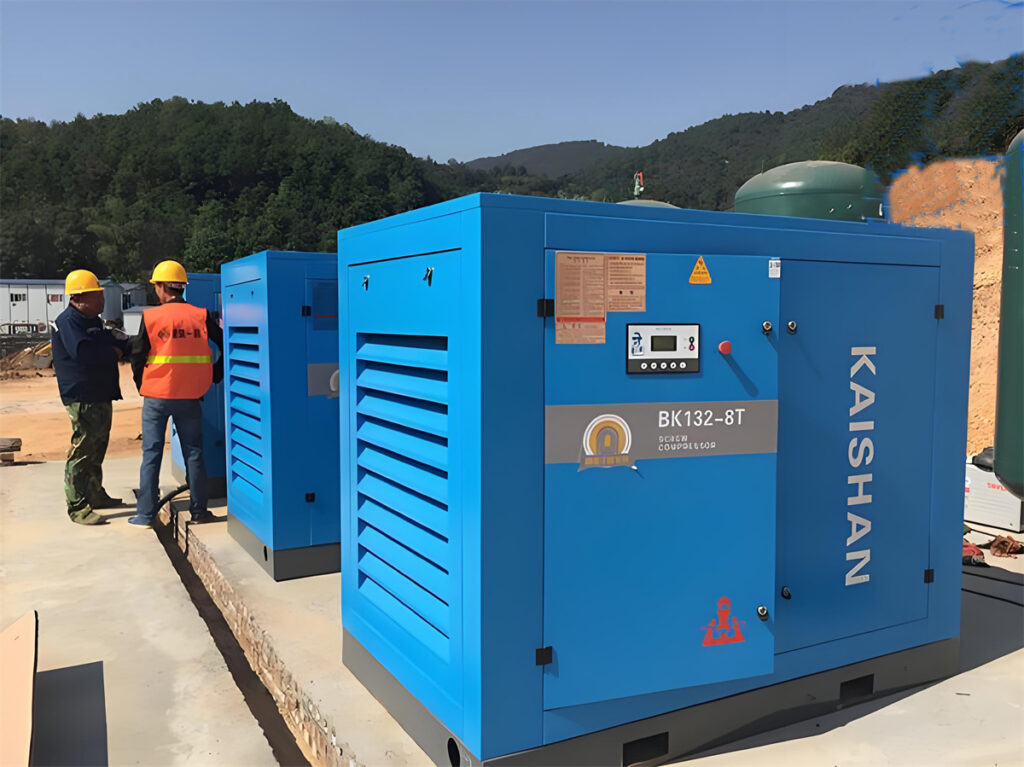
Published: April 20, 2026 Keywords: Global Market Share, Export Data, RCEP, Permanent Magnet Variable Frequency, Industrial Chain Advantages
In 2025, driven by both global demand recovery and energy transition, China's air compressor exports achieved a historic leap. According to data jointly released by the General Administration of Customs of China and industry associations, China's air compressor exports reached US$9.28 billion in 2025, a year-on-year increase of 26.3%; the export volume was approximately 1.82 million units, accounting for 46.7% of the global total. China has remained the world's largest air compressor producer and exporter for three consecutive years.
I. Global Market Distribution: Diversified Layout, Emerging Market Boom
Southeast Asia (Largest Market): Exports reached US$2.93 billion, accounting for 31.6%; Vietnam, Thailand, and Indonesia remained the top three, benefiting from RCEP tariff reductions, with strong demand for permanent magnet variable frequency and low-pressure screw compressors.
- Middle East: Exports reached US$1.71 billion, accounting for 18.4% of total exports; infrastructure and oil and gas investments in Saudi Arabia, the UAE, and Iraq drove orders for large diesel-powered mobile air compressors.
- Africa: Exports reached US$1.41 billion, accounting for 15.2% of total exports; the recovery of mining and manufacturing in South Africa, Nigeria, and Algeria led to a rapid increase in the penetration rate of high-performance screw compressors.
- Europe/North America (High-end Breakthrough): Exports reached US$1.25 billion and US$1.08 billion respectively, accounting for 13.5% and 11.6% of total exports; permanent magnet variable frequency two-stage compressors, oil-free compressors, and magnetic levitation compressors are rapidly replacing European and American domestic brands, with high-end products accounting for 38% of exports.
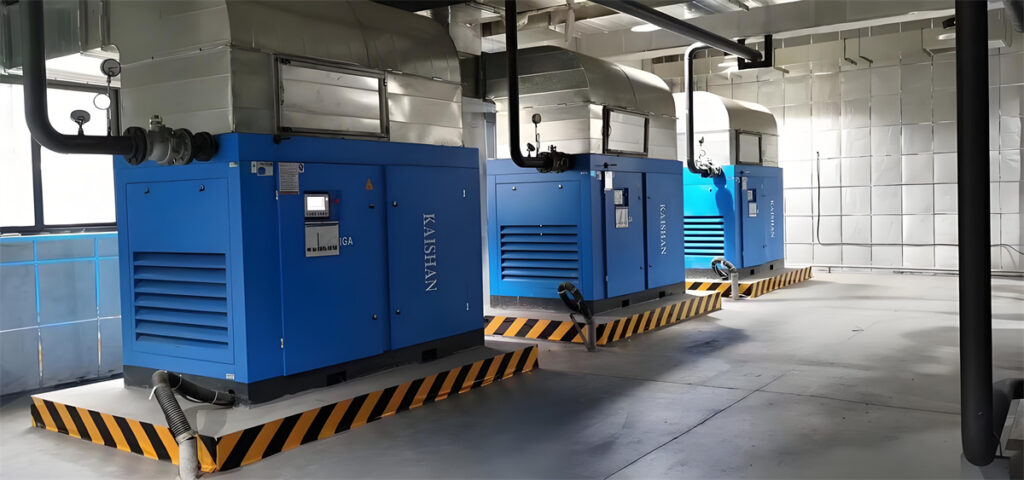
II. Product Structure Upgrade: Energy Saving, Intelligentization, and Oil-Free Compressors Become Mainstream
- Permanent Magnet Variable Frequency Screw Compressors: Contributed over 60% of the export growth, with energy savings of 20%–35%; orders from high-end markets such as Europe, Australia, and South Korea increased by over 40% year-on-year. • Two-stage compression + heat recovery: Achieves Level 1 energy efficiency (IE4), widely used in the automotive, electronics, food, and pharmaceutical industries, with a unit price 30%–50% higher than ordinary models.
- Oil-free screw/scroll compressors: Breaking the overseas brand monopoly, with export volume increasing by 58% year-on-year in 2025, entering high-end fields such as medical, pharmaceutical, and precision manufacturing.
- Intelligent interconnected air compressors: Equipped with remote monitoring, energy efficiency analysis, and fault early warning systems, rapidly gaining popularity in Southeast Asia and the Middle East, improving equipment management efficiency by over 30%.
III. Core Competitiveness: Full Industry Chain + Technological Iteration + Cost Advantage
- World's most complete industry chain: The Yangtze River Delta and Pearl River Delta regions gather enterprises covering the entire chain, including complete machines, main units, motors, controllers, and coolers, resulting in delivery cycles 30%–50% shorter than European and American brands, and faster response to customization needs.
- Continued Increase in Technological Investment: Leading companies such as Kaishan, Baosheng, and Hanbell Precision Machinery invest over 5% of their revenue annually in R&D, achieving internationally advanced levels in core technologies such as permanent magnet synchronous motors, high-efficiency compressors, and intelligent control.
- Significant Cost-Effectiveness: With equivalent configurations, domestically produced air compressors are 40%–60% cheaper than European and American brands. Against the backdrop of high global energy costs, the investment payback period is shortened to 1.5–2.5 years.
IV. Trend Outlook: Exports Expected to Exceed US$11 Billion in 2026
With the deepening of the Belt and Road Initiative, the release of RCEP benefits, and the expansion of global demand for energy-saving retrofits, China's air compressor exports are expected to reach US$11.2–11.8 billion in 2026, representing a year-on-year increase of 20%–27%. The proportion of high-end oil-free, magnetic levitation, and process compressors will further increase to 45%, and Chinese brands will upgrade from a focus on "cost-effectiveness" to a dual-driven approach of "technology + brand."