
](https://kaishanpro.com/wp-content/uploads/2026/09/What-Is-a-Drilling-Rig.webp)
Drilling rigs range from compact construction machines to enormous mining and oilfield systems, but all are designed around one fundamental task: creating controlled holes underground.
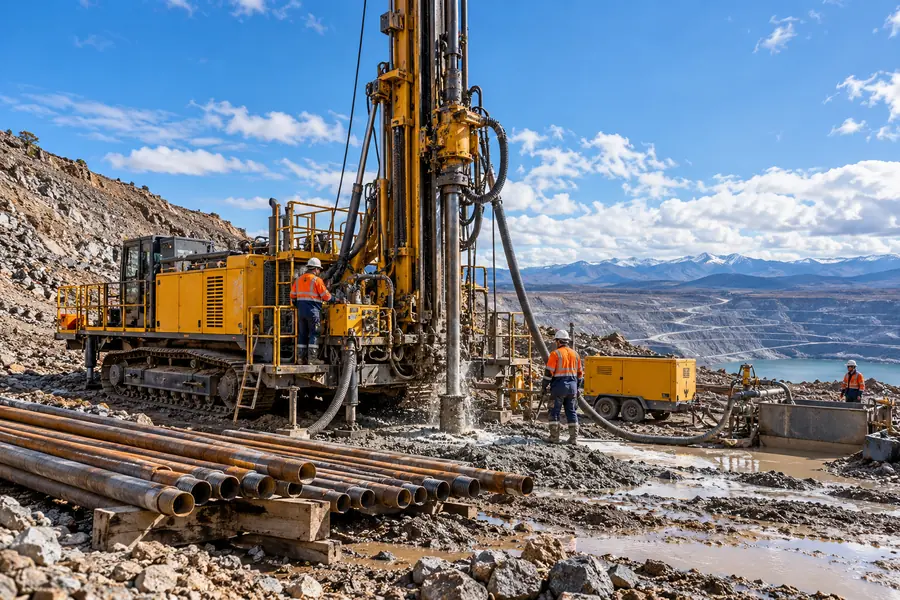
A drilling rig is a machine or integrated equipment system used to create boreholes in soil or rock. It supplies the power, rotation or percussion, feed force, drill string control, and cuttings-removal system needed to advance a hole. Drilling rigs are used in mining, water wells, foundations, mineral exploration, geothermal projects, and oil and gas.
I find it easiest to understand a drilling rig as a complete drilling platform rather than simply the component that turns the drill bit.
What Does a Drilling Rig Do?
The main purpose of a drilling rig is to create a hole of the required diameter, depth, direction, and quality through a particular geological formation.
A drilling rig applies mechanical energy to a drill bit, controls the bit's movement into the ground, supports the drill string, and removes broken material from the borehole. Depending on the drilling method, the rig may use rotation, percussion, or both, while compressed air, water, drilling mud, or another circulation medium clears cuttings from the hole.
The rig supplies drilling power
Every drilling method needs a source of energy.
Depending on the rig, this can come from:
diesel engine → hydraulic system
electric motor → hydraulic or electric drive
or:
external compressed-air supply
That energy is converted into the drilling action required at the bit.
For rotary drilling, the rig provides:
torque + rotation
For top-hammer drilling, it provides:
percussion + rotation
For DTH drilling, the rig provides rotation and feed while compressed air powers the hammer located directly behind the bit.
Epiroc's current surface-drill portfolio demonstrates how the same broad machine category can use top-hammer, DTH, and other drilling methods across mining, quarrying, and civil-engineering applications.
The rig pushes the bit into the formation
A drill bit cannot advance effectively simply by rotating.
The rig also needs controlled feed force.
Depending on equipment design, this can be called:
feed force
pulldown
crowd force
or:
weight on bit
The feed mechanism moves the drilling head along the mast and transfers force through the drill string to the bit.
For example, Epiroc's current Pit Viper 351 rotary blasthole drill can apply up to about 534 kN of pulldown and roughly 56,700 kg of weight on bit for large mining holes.
A much smaller construction or water-well rig would require a very different level of force.
The rig controls the drill string
The drill string connects the rig to the bit.
Depending on the application, it can contain:
- Drill pipe
- Drill rods
- Kelly bar
- Subs
- Collars
- Stabilizers
- Hammer
- Bit
The rig must:
rotate it → push it downward → pull it upward → add sections → remove sections
Modern machines often include automated rod or pipe handling so operators do not have to manually manage heavy drill-string components.
Epiroc's current surface rigs, for example, offer rod-handling systems intended to reduce manual handling.
The rig must remove cuttings
Drilling creates broken material continuously.
If those cuttings remain at the bottom of the hole, drilling performance falls.
Depending on the method, cuttings can be removed by:
compressed air
water
drilling mud
reverse circulation
or:
mechanical auger transport
In RC mineral exploration, for example, Epiroc describes compressed air traveling down dual-wall drill rods while broken rock samples return through the inner tube to a cyclone and sample splitter.
So a drilling rig is not just a hole-making machine.
It is also a cuttings-management system.
What Are the Main Parts of a Drilling Rig?
The exact components depend heavily on the application, but most drilling rigs contain systems for power, drilling motion, feed or hoisting, drill-string handling, and cuttings removal.
The main parts of a drilling rig typically include a power source, mast or derrick, rotary or percussion drilling system, feed or hoisting system, drill string, drill bit, hydraulic and control systems, and a circulation or compressed-air system for removing cuttings. Mobile rigs also include a crawler, truck, trailer, or other carrier.
Power source
The power unit supplies the energy needed by the drilling machine.
It may drive:
hydraulic pumps → rotary head → feed system → crawler → winches → pipe handler
Large oilfield drilling rigs also require substantial power for drawworks, mud pumps, rotary equipment, and auxiliary systems.
SLB defines a drilling rig in oilfield service as the machine used to drill a wellbore and lists major equipment including the mast or derrick, drawworks, rotary table or top drive, drill string, power-generation equipment, mud tanks, and mud pumps.
Mast or derrick
The mast supports and guides the drilling equipment.
On surface mining and water-well rigs, it normally supports the rotary head and drill pipe.
On oilfield rigs, the derrick or mast provides the height and structural support required to handle long drill-string sections and other well equipment.
Foundation drilling rigs also use heavy mast structures capable of supporting large rotary drives and Kelly bars.
Rotary head or drilling mechanism
The drilling head transfers power into the drill string.
On a rotary rig, it provides:
torque + rpm
On a top-hammer machine, the drilling unit also generates percussion.
On a DTH rig, the rotary head rotates the drill pipe while the pneumatic hammer operates at the bottom of the hole.
The correct head capacity therefore depends on the drilling method.
Feed or hoisting system
The feed system creates controlled downward and upward movement.
During drilling:
feed pushes the bit downward
During rod recovery:
pullback lifts the drill string
In an oilfield drilling rig, a hoisting system with drawworks performs the major lifting function.
This is why the physical design of an oil rig looks very different from a crawler-mounted blasthole rig even though both fall under the term “drilling rig.”
Drill string and bit
The drill string transfers energy from the machine to the borehole.
The bit actually interacts with the formation.
Different applications use different bits, such as:
tricone bit
DTH button bit
top-hammer bit
PDC bit
core bit
auger
The rig cannot be selected independently of these drilling tools.
Cuttings-removal system
For mining DTH rigs, this may be a high-pressure air compressor.
For large rotary blasthole drilling, high-volume compressed air cleans the hole.
For oilfield drilling, mud pumps circulate drilling fluid through the drill string and back toward the surface.
For foundation auger drilling, the auger itself can mechanically convey soil upward.
The removal method is therefore closely tied to the drilling method.
What Are the Main Types of Drilling Rigs?
There is no single universal classification because drilling rigs can be grouped by application, drilling method, mobility, or power system.
The main drilling-rig categories include rotary rigs, DTH rigs, top-hammer rigs, core and RC exploration rigs, foundation rigs, water-well rigs, and oil-and-gas rigs. Some machines can perform more than one drilling method, so I classify the rig first by the job it must perform and then by the drilling technology.
Rotary drilling rigs
Rotary rigs use continuous rotation and feed force.
They are common in:
large mining blastholes
foundation piling
water wells
oil and gas
For example, Epiroc's Pit Viper 231 can be configured for rotary or DTH drilling and covers approximately 152–251 mm holes, demonstrating how modern blasthole equipment can support more than one method.
Its larger Pit Viper 351 is a dedicated large-hole rotary machine covering approximately 270–406 mm holes.
DTH drilling rigs
DTH means:
down-the-hole
A pneumatic hammer sits directly behind the drill bit.
Compressed air travels down the drill pipe and drives the piston inside the hammer.
The hammer repeatedly strikes the bit while the rotary head slowly rotates the drill string.
Epiroc currently offers DTH surface rigs covering mining, quarrying, and construction, with hole ranges that vary from roughly 90 mm into the 200 mm-plus class depending on model.
DTH is particularly useful for:
hard rock + relatively straight holes + medium-to-large diameters
Top-hammer drilling rigs
Top-hammer drilling places the rock drill at the top of the drill string.
Impact energy travels through the drill rods to the bit.
These rigs are widely used for:
quarrying → bench drilling → construction → smaller mining holes
Epiroc's current surface portfolio includes numerous top-hammer rigs for holes from small civil-engineering diameters up into larger quarry applications.
Exploration drilling rigs
Mineral exploration rigs are used to understand what is below the surface before full mine development.
Two important methods are:
core drilling
and:
reverse circulation drilling
Epiroc describes core drilling as recovering a solid cylindrical sample from a known depth, while RC drilling returns crushed rock cuttings through a controlled sampling system.
Exploration rigs therefore prioritize:
sample quality + depth accuracy + geological information
rather than simply production drilling speed.
Foundation drilling rigs
Foundation rigs drill large-diameter holes for piles and other structural foundations.
They commonly use:
Kelly drilling
CFA drilling
full-displacement drilling
and other specialist methods.
Liebherr's current LB foundation range spans machines with maximum rotary torque from around 200 kNm to 557 kNm, with listed Kelly drilling depths extending beyond 120 m on its largest current model.
These rigs are designed very differently from mining blasthole machines because they may drill holes several meters in diameter.
Oil and gas drilling rigs
Oilfield rigs create much deeper wellbores.
SLB identifies the key equipment as including:
mast/derrick + drawworks + top drive or rotary table + drill string + mud tanks + mud pumps + power system
and notes that offshore rigs use essentially the same drilling-package components installed on an offshore platform or vessel.
The drilling depth and well-control requirements make these machines much larger and more complex than typical construction rigs.
How Do I Choose the Right Drilling Rig?
The right rig is determined by the hole and geology, not simply by engine power, machine weight, or maximum drilling depth.
I choose a drilling rig by defining the application, geology, required hole diameter, target depth, drilling angle, drilling method, productivity requirement, site conditions, and available support. I then match the drill string, hammer or bit, compressor or circulation system, torque, feed force, pullback, and carrier to those requirements.
Start with the application
I first ask:
What is the hole for?
A blasting contractor needs a different rig from:
a water-well contractor
a foundation contractor
a mineral explorer
or:
an oil company
The application determines almost every major design choice.
Then define geology
I want to know:
soft soil?
clay?
limestone?
fractured rock?
hard granite?
The geology affects:
drilling method → bit → torque → percussion requirement → flushing
For example, DTH may be particularly useful in hard rock, while a foundation Kelly rig may be configured around different tooling for soil and rock layers.
Define hole diameter and depth
This is one of the most important steps.
A 100 mm quarry hole and a 3,000 mm foundation pile cannot use the same machine.
Liebherr's current foundation rigs, for example, include models capable of Kelly drilling diameters measured in several meters.
By comparison, Epiroc's current surface mining and quarry rigs commonly work in hole ranges measured in tens or hundreds of millimeters.
Both are drilling rigs.
Their application envelopes are completely different.
Match the drilling system
Once I know:
application + geology + diameter + depth
I select the drilling method.
My simplified sequence is:
project → formation → hole → drilling method → bit/hammer → drill string → machine
For DTH, I add:
required pressure + airflow → compressor
For rotary drilling, I focus on:
torque + weight on bit + flushing
For foundation rigs:
rotary torque + crowd force + Kelly/CFA capability + pile diameter
For exploration:
sample quality + depth + recovery method
Check mobility and logistics
The rig has to reach the worksite.
I therefore check:
- Crawler or truck-mounted
- Transport weight
- Transport dimensions
- Ground pressure
- Road regulations
- Site gradients
- Working space
- Mast raising clearance
A technically capable rig that cannot reach or maneuver on the site is still the wrong machine.
Check support and lifecycle cost
I also compare:
parts availability + dealer support + tooling supply + compressor support + fuel use + maintenance access
The lowest purchase price does not necessarily produce the lowest cost per drilled meter.
For professional drilling work, I usually prefer to calculate:
total operating cost ÷ productive drilled meters
rather than comparing machine price alone.
My insights: What Is a Drilling Rig
The simplest definition is useful, but for equipment selection I think of the drilling rig as the complete system that converts energy into a controlled borehole.
A drilling rig is a machine or integrated drilling system used to create holes in the ground by controlling the drill bit, drill string, feed force, rotation or percussion, and cuttings-removal process. Depending on the application, it may drill blast holes, foundations, water wells, exploration holes, geothermal boreholes, or oil-and-gas wells.
My first insight is that the rig is more than the drill head
The rotary head or rock drill is only one component.
A productive machine also needs:
power → feed → mast → drill string → bit → flushing → mobility → controls
If one part is badly matched, drilling performance falls.
For example, a powerful DTH rig with an undersized compressor cannot provide the required hammer performance.
A high-torque rotary rig with poor cuttings removal may also drill inefficiently.
My second insight is to distinguish drilling method from drilling application
People often mix these two categories.
DTH is a drilling method.
Water-well drilling is an application.
A water-well rig might use DTH drilling.
Likewise:
rotary drilling is a method.
mining blasthole drilling is an application.
A mining rig can use conventional rotary drilling or DTH depending on the hole and geology.
This distinction makes equipment comparison much clearer.
My third insight is that the same term covers machines of radically different size
Consider three examples.
An Epiroc surface DTH machine may drill quarry holes around 90–150 mm.
A Pit Viper 351 can drill rotary blastholes up to approximately 406 mm.
A Liebherr LB 55 foundation rig can drill Kelly piles up to approximately 4,800 mm in diameter and about 120.4 m deep.
All three are drilling rigs.
That is why saying:
“I need a drilling rig.”
is not enough information for a useful quotation.
My fourth insight is to define the hole before discussing the machine
For a real equipment inquiry, I collect:
| Requirement | Information I need |
|---|---|
| Application | Mining, water well, foundation, exploration, etc. |
| Geology | Soil and rock conditions |
| Hole diameter | Minimum and maximum |
| Hole depth | Normal and maximum |
| Hole angle | Vertical or inclined |
| Drilling method | Rotary, DTH, top hammer, core, RC, etc. |
| Productivity | Holes/meters per shift |
| Power | Diesel, electric, external air |
| Site | Altitude, temperature, terrain |
| Mobility | Crawler, truck, trailer |
| Support | Parts and service requirement |
With this information, I can start engineering the correct drilling package.
Without it, comparing rigs is mostly guesswork.
My fifth insight is that I select the drilling system from the bottom of the hole upward
When someone asks me, “What is a drilling rig?”, my practical answer is:
It is the complete machine that controls how a hole is created. It provides the energy, drill-string movement, drilling force, and cuttings removal needed to move a bit through the formation safely and productively.
For equipment selection, I work in this order:
application → geology → hole diameter → depth → drilling method → bit or hammer → drill pipe → airflow/circulation → torque → feed/pullback → rig
This is more reliable than beginning with:
engine horsepower
or:
machine brand
or:
maximum depth
A drilling rig should be selected as part of a complete drilling system.
For DTH work, I match:
hammer + bit + pipe + compressor + rig
For rotary mining:
bit + drill string + torque + weight on bit + flushing + rig
For foundation work:
pile diameter + depth + geology + drilling method + rotary torque + crowd force + rig
For mineral exploration:
target depth + sample method + geology + drill string + circulation + rig
That application-first approach gives me a much better chance of achieving stable penetration, acceptable hole quality, longer component life, and lower cost per drilled meter.
Conclusion
A drilling rig is a machine that powers, controls, and advances a drill bit to create boreholes. The correct rig depends on application, geology, diameter, depth, and drilling method.