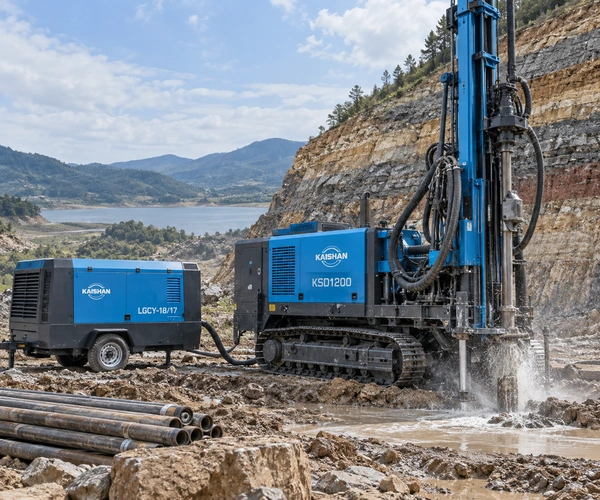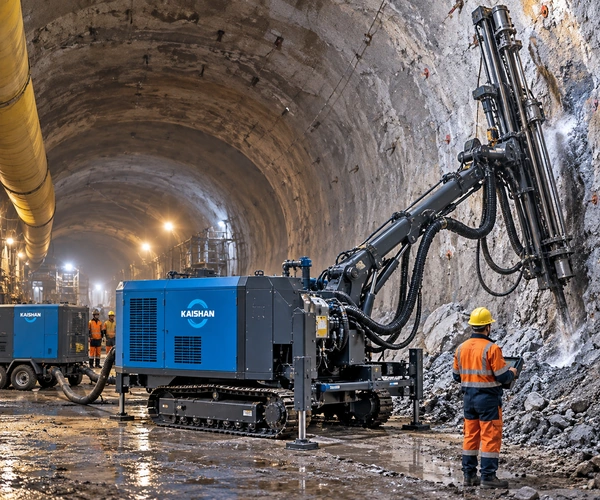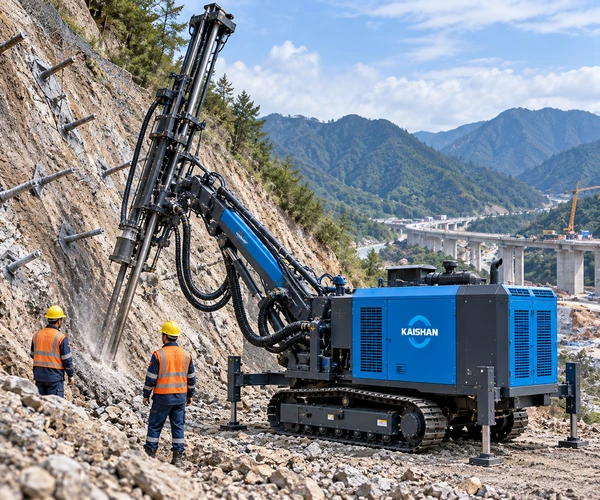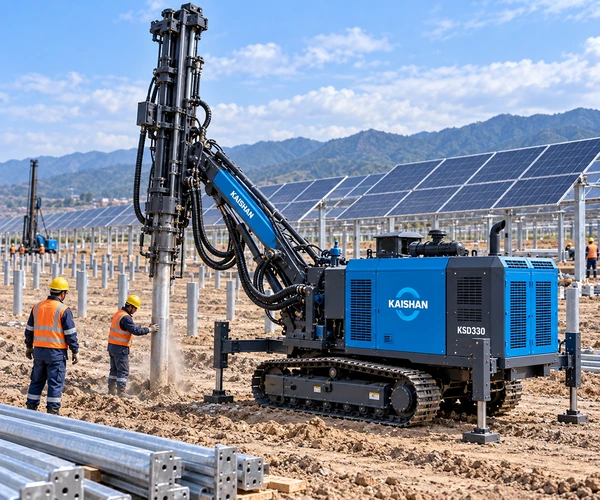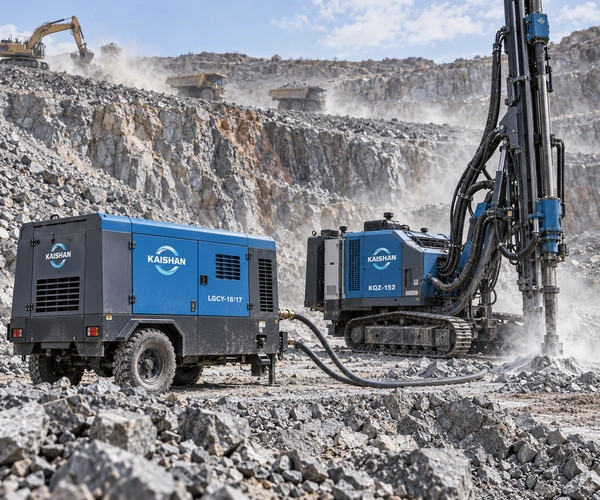
Mining & Quarrying
- Rock drilling and blasting
- High dust and harsh conditions
- Continuous heavy-duty operation
- Reliable and durable equipment

Before comparing models, define the actual work the equipment must perform. Different applications require different technical priorities.


Once the application is clear, the next step is to convert operating requirements into measurable equipment parameters.
Select the right compressor based on your air demand, pressure, air quality and operating profile.
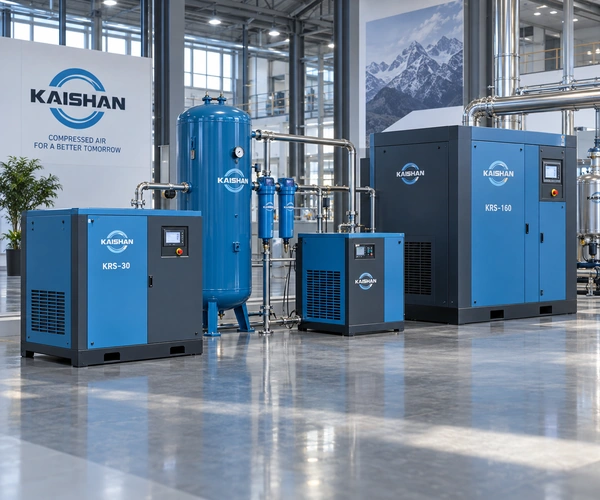
Determine total air consumption (m³/min or cfm) and peak demand.
Confirm system pressure (bar or psi) and pressure stability.
Identify needs for clean, dry air (e.g. dew point, oil-free).
Consider continuous or intermittent operation.
Select the right drilling equipment based on geological conditions, hole requirements and productivity targets.
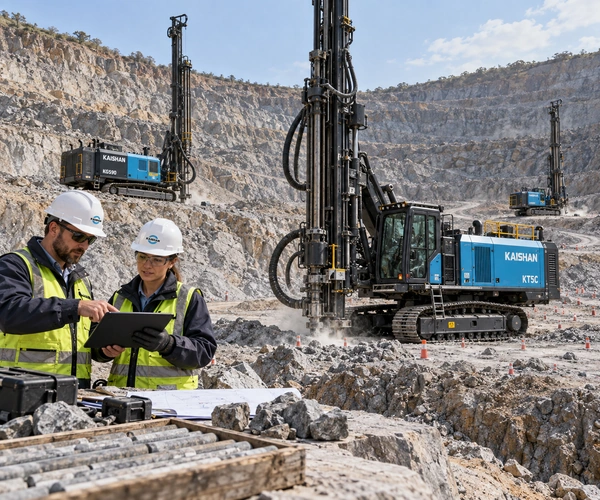
Understand rock formation, hardness and ground conditions.
Vertical, inclined or horizontal.
Determine target depth and drilling accuracy.
Determine expected penetration rate and daily output.
Specify hole size (e.g. 90–300mm).
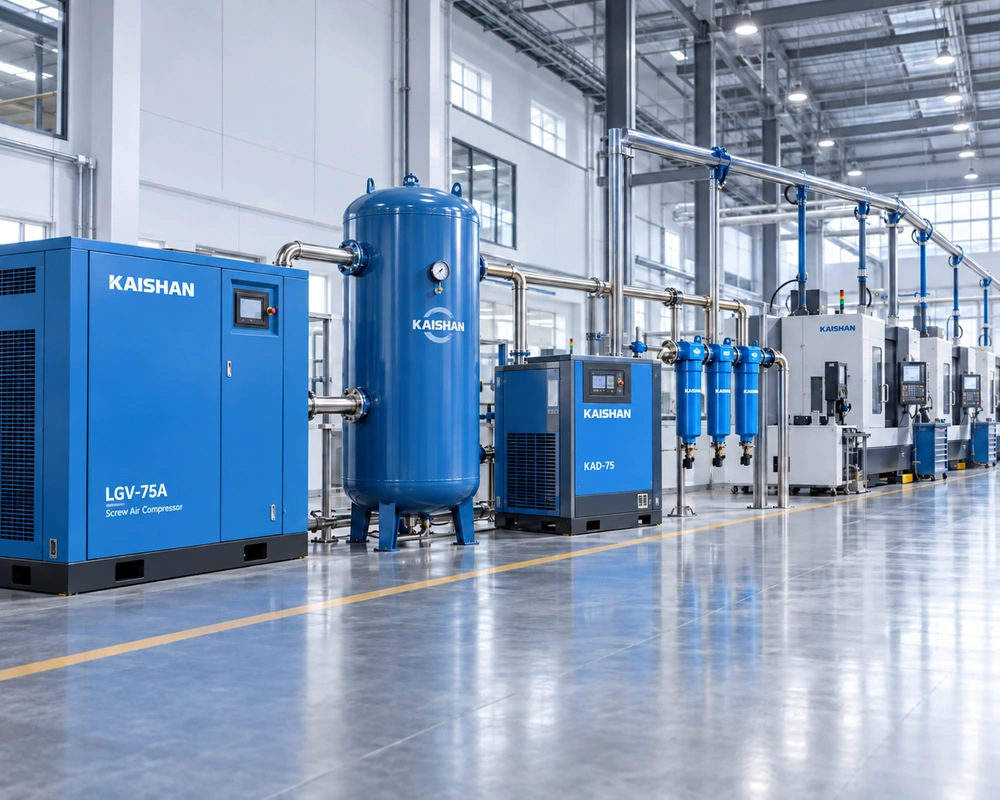
A suitable machine may still perform poorly if supporting equipment is incorrectly matched. Kaishan recommends evaluating the complete equipment chain.

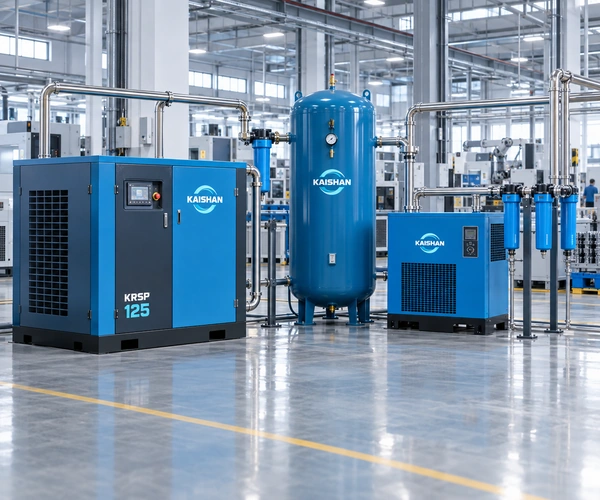
A complete compressed air system integrates air generation, storage, drying, filtration and distribution to provide stable, clean and efficient compressed air for production. The configuration can be matched according to required airflow, pressure, air quality and operating conditions.
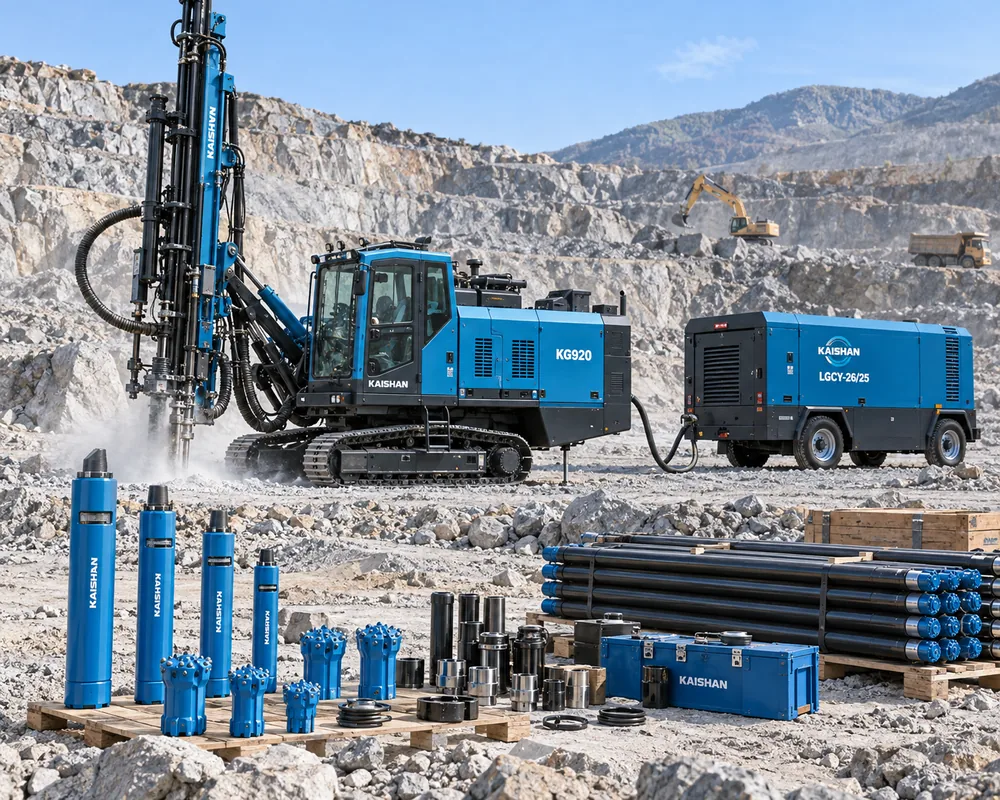
A matched drilling system combines the drilling rig, compressed-air supply and drilling tools required for efficient penetration and stable operation. Equipment can be selected according to hole diameter, drilling depth, ground conditions and project productivity requirements.
Rated specifications do not always represent actual jobsite performance. Environmental conditions should be reviewed before final equipment selection.
Consider high or low temperature conditions (e.g. -20°C to 50°C).
Assess altitude effects on engine/compressor performance.
Evaluate dust levels and take appropriate protection measures.
Consider humidity, rain and water exposure conditions.
Check site space, transportation constraints and accessibility requirements.
Confirm power supply conditions (diesel, electric, grid availability).
Industrial equipment may operate for thousands of hours over many years. The lowest initial purchase price does not necessarily mean the lowest lifecycle cost.
Lower energy use reduces operating cost.
Easy maintenance design lowers time and cost.
Use the right tools for longer service life.
Global supply network ensures fast delivery.
Proven quality for maximum uptime.
Reliable equipment minimizes production losses.
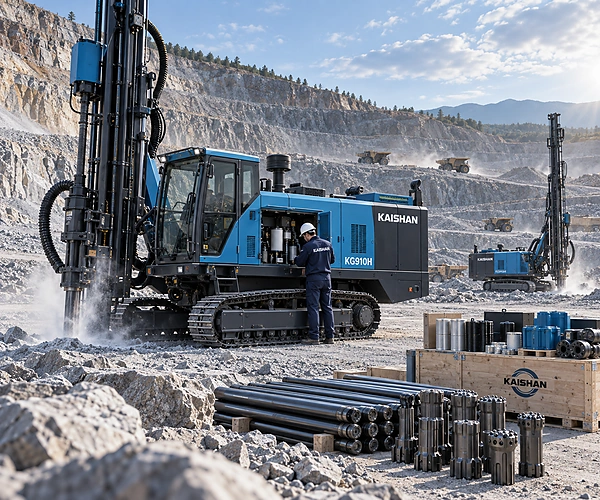
Use a structured process to reduce selection errors and improve project planning.
Clarify your project goals and main requirements.
Understand site conditions, climate and environment.
Set key parameters such as airflow, pressure, depth, etc.
Choose the right model and configuration.
Configure complete system and accessories.
Compare TCO and long-term value.
Get expert review and finalize the solution.
Equipment selection should not end when a model is chosen. Kaishan supports customers through equipment evaluation, configuration, spare-parts planning and long-term technical support.
Our engineers review your requirements and provide professional advice.
Get the most suitable equipment configuration for your project.
Plan spare parts and consumables for long-term operation.
Reduce downtime and extend equipment service life.
Global support team for fast response and online assistance.
This guide provides general information for equipment selection. Final equipment configuration should be confirmed according to specific working conditions, applicable standards and safety requirements.
Reliable equipment recommendations require more than product catalog data.
They require an understanding of manufacturing, application engineering, operating environments and long-term equipment performance.
Kaishan Group was founded in 1956 and has developed approximately 70 years of industrial manufacturing experience.