
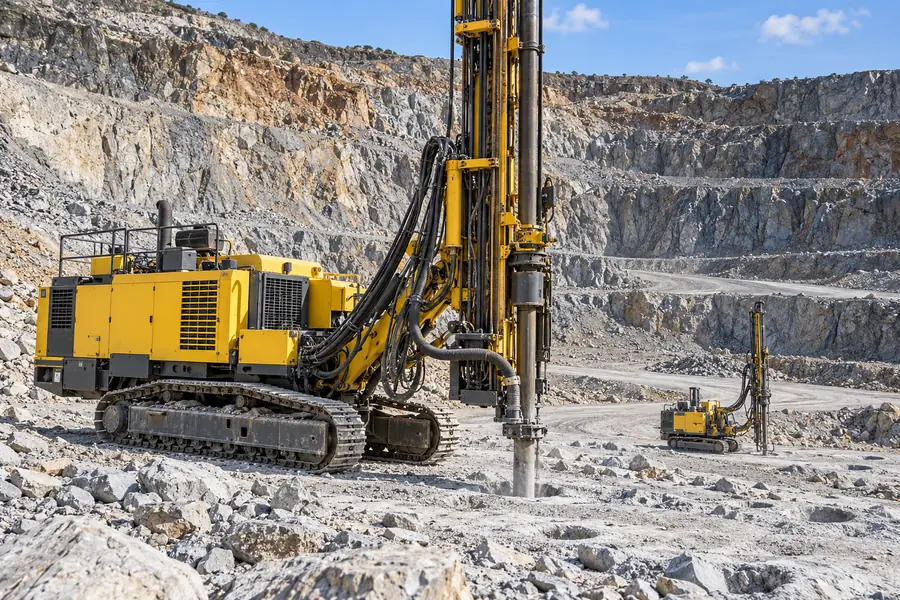
](https://kaishanpro.com/wp-content/uploads/2026/10/What-is-the-cost-of-a-DTH-drilling-rig.webp)
Buying a DTH drilling rig without understanding its full cost can lead to unexpected compressor expenses, expensive drill tools, high fuel consumption, and costly production delays.
A DTH drilling rig can cost approximately US$14,000 for an entry-level split-type machine, while medium-sized rigs may start around US$22,000–28,000. Larger integrated mining rigs can cost US$130,000–275,000 or more. Premium used machines may also cost several hundred thousand dollars. Actual prices depend on specifications, compressor configuration, brand, and destination.
The purchase price is only one part of the investment.
How Much Does a DTH Drilling Rig Cost in 2026?
DTH drilling rig prices vary significantly by size, depth, hole diameter, machine configuration, and equipment condition. A small split-type machine cannot be compared directly with a fully integrated mining rig.
In 2026, published supplier prices show small split-type DTH rigs starting around US$14,000, medium split-type machines from US$22,000, and medium integrated units from US$28,000. Larger integrated quarry rigs are advertised from around US$45,000 to over US$200,000. Used premium mining rigs may carry asking prices above US$400,000.
1. Small DTH drilling rigs
Indicative supplier starting price: US$14,000–25,000+
Small DTH rigs are generally suited for:
- Small quarry operations
- Construction rock drilling
- Shallow blastholes
- Anchoring and slope projects
- Certain small water-well applications
These machines tend to emphasize:
compact dimensions + straightforward operation + transport flexibility.
According to Rancheng Machinery's February 2026 published pricing guide:
Small split-type rigs start around US$14,000.
Small integrated rigs start around US$25,000.
Source: Rancheng — DTH Drilling Rig Cost Guide
These are supplier starting prices, not average transaction prices.
A low-cost split rig may require a separate compressor, hammer, drill pipe, and other equipment before it can begin working.
Therefore, a US$14,000 rig is not necessarily a US$14,000 drilling system.
2. Medium-sized DTH drilling rigs
Indicative supplier starting price: US$22,000–90,000+
Medium-sized machines are common in:
quarrying
road construction
civil engineering
and:
surface mining.
They may be designed for hole diameters around:
90–165 mm
depending on model.
Rancheng's 2026 published guide lists:
Medium split-type rigs from US$22,000
and:
Medium integrated rigs from US$28,000.
Other suppliers advertise more highly equipped integrated crawler models at:
US$45,000–90,000.
For example, Henan Songte Machinery lists integrated DTH crawler configurations such as:
SD-535: US$45,000–60,000
SD-545: US$65,000–75,000
and:
SDKH103: US$72,000–90,000.
Source: Songte — Integrated DTH Rig Listings
These publicly advertised figures are useful for preliminary budgeting.
However, I would verify the exact:
onboard compressor
engine
hammer
drill pipe
and:
quotation inclusions
before treating the figures as comparable offers.
3. Large integrated DTH drilling rigs
Example advertised range: US$130,000–275,000+
Larger DTH rigs serve:
high-production quarries
hard-rock mining
and:
larger-diameter production drilling.
These machines may include:
large high-pressure compressors
high-power diesel engines
advanced hydraulic systems
automatic rod handling
operator cabins
and:
electronic drilling controls.
For example, Rancheng publishes an approximate price of:
US$130,000–150,000
for its integrated RCKS-11 rig.
The published configuration includes:
100–140 mm hole diameter
approximately 32 m economical drilling depth
18 m³/min compressed air at 18 bar
and:
242 kW engine power.
Source: Rancheng — RCKS-11 Integrated DTH Rig
Zhejiang Miningwell also advertises larger integrated DTH platforms with published FOB-China ranges including:
US$138,000–150,000
and:
US$215,000–275,000
depending on listed model.
Source: Miningwell — Integrated DTH Rig Listings
These figures illustrate the market's wide price spread.
They do not establish a universal price ceiling for large mining equipment.
4. Water-well DTH drilling rigs
Indicative listings: around US$10,000–100,000+, with larger professional rigs considerably higher
Water-well rigs have different requirements from surface mining rigs.
They may need:
100–300 m or greater drilling depth
high pullback capacity
longer drill strings
casing capability
and:
mud rotary/DTH flexibility.
Some supplier listings advertise compact crawler water-well rigs around:
US$10,000–20,000.
However, these offers may exclude the high-pressure air compressor and may have limited heavy-duty capability.
For more substantial professional water-well equipment, the budget can rise into:
tens or hundreds of thousands of dollars.
I pay particular attention to whether the machine supports:
DTH only
or:
DTH + mud rotary + other drilling methods.
A multipurpose machine may require additional pumps, tools, and accessories.
5. Used premium DTH drilling rigs
Used mining rigs can still command very high prices.
For example, publicly advertised 2026 listings include:
Epiroc FlexiROC D65, 2012: approximately US$240,000 asking price.
Epiroc FlexiROC D65-10LF, 2020: approximately US$425,000 asking price.
Sources:
Machineryline — Used FlexiROC D65
Machineryline — Used FlexiROC D65-10LF
These figures are seller asking prices, not confirmed sale prices.
Used equipment must also be evaluated through:
running hours
maintenance history
compressor condition
hydraulic system
machine structure
and:
remaining tooling life.
2026 DTH drilling rig price comparison
| DTH rig category | Indicative published prices (USD) | Important qualification |
|---|---|---|
| Small split-type | From $14,000 | Compressor may be excluded |
| Small integrated | From $25,000 | Confirm onboard air package |
| Medium split-type | From $22,000 | Compare complete drilling package |
| Medium integrated | From $28,000; examples up to $90,000 | Highly configuration-dependent |
| Larger integrated mining | Examples around $130,000–275,000+ | Compressor, automation, size vary |
| Compact water-well DTH | Some listings around $10,000–20,000 | Verify depth and exclusions |
| Used premium mining | Examples around $240,000–425,000 | Depends on hours and condition |
Prices are supplier-published starting prices and selected public asking-price examples available in 2026. They are not statistically representative global market averages, firm quotations, or prices for equivalent machines.
What Factors Affect the Price of a DTH Drilling Rig?
A DTH rig becomes more expensive as its required drilling capacity, air supply, structural strength, and automation increase.
The main price factors are hole diameter, maximum drilling depth, rock hardness, hammer size, compressor pressure and airflow, integrated or split configuration, engine and hydraulic power, rod-handling automation, emissions compliance, and manufacturer support. The compressor and drilling-tool package are particularly important because DTH drilling uses compressed air for both percussion and flushing.
Hole diameter
Larger holes usually require:
larger hammers
larger drill bits
more compressed air
and:
more robust drilling components.
A rig designed for:
90–115 mm holes
will generally have different equipment requirements from one designed for:
195–254 mm holes.
The larger machine may require substantially greater:
engine power + compressor capacity + machine weight.
Drilling depth
Depth influences:
drill-pipe length
rod-handling system
pullback capacity
air pressure losses
and:
machine structure.
A quarry rig drilling 20 m blastholes and a water-well rig drilling 300 m boreholes have very different design requirements.
Maximum depth should always be evaluated with the actual hole diameter and drill-string configuration.
Compressor capacity
This is one of the largest cost variables.
DTH hammers are powered by compressed air.
The rig needs sufficient:
operating pressure
and:
free-air delivery (FAD).
For example, Kaishan's current equipment selection guide distinguishes:
KG split rigs, which require an external compressor,
from:
KT integrated rigs, which include onboard air systems.
Published examples include:
KT12: 20 m³/min at 22 bar
KT25: 31 m³/min at 25 bar
KT30: 36 m³/min at 35 bar.
Source: Kaishan — How to Choose a DTH Drilling Rig
These differences have a major effect on:
machine cost + fuel consumption + operating weight.
Integrated versus split DTH rigs
A split rig normally consists of:
drilling rig + separate mobile compressor.
An integrated rig combines:
drilling machine + compressor
on one platform.
A split rig may have a lower initial machine price.
It can also be attractive when the buyer already owns suitable compressors.
However, if the buyer must purchase a compressor separately, the complete investment may become significantly higher.
An integrated rig may cost more initially but reduce:
equipment transportation
hose management
and:
site setup time.
I compare complete systems rather than rig-only prices.
Hydraulic and mechanical configuration
The drilling system may include:
hydraulic rotary drive
hydraulic feed
automatic rod changer
dust collection
operator cabin
and:
drilling controls.
More advanced equipment generally increases purchase price.
But it may also improve productivity or reduce operator workload.
The correct choice depends on how frequently the rig will operate.
Brand and service support
Manufacturers such as Epiroc, Sandvik, Kaishan, Sunward, and other DTH equipment suppliers offer different product ranges and service arrangements.
I compare:
machine specification
warranty
spare-parts availability
local technician coverage
and:
drilling productivity.
I do not assume that a higher price automatically guarantees lower operating costs.
Those benefits need to be demonstrated under comparable conditions.
What Additional Costs Should Be Included in a DTH Rig Budget?
The machine price can exclude essential components, particularly on split-type rigs. A buyer should calculate the investment required to put the equipment into production.
A complete DTH rig budget should include the drilling machine, high-pressure compressor where needed, hammer, bits, drill pipes, accessories, initial spare parts, freight, insurance, import charges, commissioning, and operator training. Running costs then include fuel, lubricants, tooling wear, maintenance, labor, and downtime.
1. High-pressure compressor
For a split DTH rig, the compressor can be one of the most expensive additional purchases.
I verify:
pressure at operating load
FAD at that pressure
ambient temperature rating
and:
altitude derating.
A compressor with the right maximum pressure but inadequate FAD may produce poor drilling performance.
I do not size the compressor from engine horsepower alone.
2. DTH hammer and drill bits
The hammer and bit must match:
hole diameter
working pressure
shank design
and:
rock condition.
In 2026, specialist supplier pricing guides show that DTH hammer costs can range from hundreds to several thousand dollars, while large or premium hammer systems may cost considerably more.
For example, specialist suppliers list individual DTH hammer and bit products with prices varying greatly by diameter and configuration.
Sources:
Kelleg — DTH Hammer Price Guide 2026
Specialised Drilling Equipment — Product Catalogue
A 4-inch and an 8-inch hammer should not be budgeted at the same price.
3. Drill pipes and accessories
A rig may require:
multiple drill rods
starter rods
adapters
lubrication equipment
and:
spare connections.
Water-well projects may also require:
casing
mud pump
or:
casing advancement equipment.
I request the exact number and dimensions of rods included in the quotation.
4. Transportation and import costs
For international buyers, the equipment price may be quoted:
EXW
FOB
CIF
or:
DAP.
These terms affect which expenses are covered by the seller.
Additional costs may include:
ocean freight
insurance
port handling
customs clearance
import duty
taxes
and:
inland transport.
A FOB-China price is not a delivered, duty-paid project price.
5. Commissioning and training
A new rig may need:
assembly
inspection
control setup
operator training
and:
hammer/compressor commissioning.
I ask whether these costs are included.
For international projects, technician travel and accommodation can also affect the budget.
Illustrative complete-system budget
Consider a hypothetical buyer purchasing a medium-sized split-type DTH rig.
| Cost item | Illustrative amount (USD) |
|---|---|
| Split DTH drilling rig | $25,000 |
| High-pressure mobile air compressor | $42,000 |
| DTH hammer and initial bits | $3,000 |
| Drill pipes and accessories | $6,000 |
| Freight and insurance | $8,000 |
| Initial spares, setup and training | $6,000 |
| Illustrative subtotal | $90,000 |
This is a budgeting example using assumed line-item amounts, not an actual supplier quote. Applicable duties, taxes, site preparation, and financing are excluded.
The lesson is important:
A US$25,000 rig-only purchase can represent a much larger complete-system investment.
That is why every quotation should specify what is included.
How Do I Calculate DTH Drilling Rig Operating Cost and Cost per Meter?
A DTH rig should be judged by productive drilling output over its service life. Initial cost is important, but fuel, compressor efficiency, hammer and bit life, and downtime can dominate project economics.
I calculate DTH drilling cost per meter by adding hourly fuel, labor, hammer and bit wear, maintenance, and equipment ownership costs, then dividing by accepted drilled meters per hour. I also include mobilization, delays, and redrilling where relevant. The cheapest rig can become the most expensive if productivity is low or downtime is frequent.
Fuel consumption
DTH rigs require energy for:
compressor operation
hydraulic rotation
feed
and:
crawler movement.
Integrated rigs may use one engine to power multiple systems.
Split rigs may use separate engines for:
drilling rig + compressor.
I compare the complete system's fuel consumption.
Hammer and bit wear
Tooling life depends on:
rock hardness
abrasiveness
operating pressure
feed force
rotation speed
and:
flushing quality.
A low-priced bit that wears rapidly can increase total drilling cost.
I compare:
bit cost ÷ meters drilled per bit.
The same logic applies to hammer maintenance and replacement.
Maintenance
Maintenance expenses include:
engine service
hydraulic oil
filters
compressor oil
separator elements
hoses
and:
undercarriage components.
For remote projects, spare-parts availability is particularly important.
Labor and downtime
A rig produces no drilling meters while waiting for:
repairs
spare parts
transport
or:
technical support.
I therefore estimate both:
operating cost per hour
and:
real production hours.
Example: drilling cost per meter
Assume a DTH rig has the following illustrative hourly costs:
| Expense | Cost per hour |
|---|---|
| Fuel | $70 |
| Labor | $35 |
| Hammer and bit wear | $35 |
| Maintenance | $25 |
| Equipment ownership allocation | $45 |
| Total | $210/hour |
If the machine produces:
15 accepted drilling meters per hour
then:
Cost per meter = $210 ÷ 15 = $14/m
This is a simplified calculation.
Real project cost can also include:
mobilization + site preparation + downtime + supervision + redrilling + consumables.
The purpose is to demonstrate the method, not to claim that US$14/m is a universal market rate.
Why productivity matters
Compare two hypothetical machines drilling the same geology and hole diameter.
Rig A
Operating cost: $160/hour
Accepted production: 10 m/hour
Cost: $16/m
Rig B
Operating cost: $230/hour
Accepted production: 18 m/hour
Cost: approximately $12.78/m
Rig B costs more per operating hour.
But its cost per accepted drilled meter is lower.
If its higher purchase cost can be justified by actual utilization, Rig B may provide better project economics.
My preferred comparison
I compare machines under the same:
hole diameter
hole depth
rock strength
hammer class
operating pressure
site altitude
and:
production schedule.
Then I request:
fuel per meter
hammer and bit life
maintenance cost
expected availability
and:
service response.
This produces a more meaningful comparison than machine price alone.
My insights: What is the cost of a DTH drilling rig
The actual cost of a DTH drilling rig depends on what the buyer means by "cost." There is the equipment price, the ready-to-drill investment, and the long-term cost of drilling.
In 2026, published entry-level DTH rig prices can begin around US$14,000, with medium machines starting around US$22,000–28,000. Larger integrated rigs can exceed US$130,000–275,000, while premium used mining rigs may list for several hundred thousand dollars. I recommend calculating complete-system cost and cost per accepted drilled meter before choosing a supplier.
My first insight: The cheapest listed rig may not be ready to drill
A low machine price may exclude:
compressor
hammer
bits
pipes
and:
freight.
I always ask:
Is this a rig-only price or a complete working package?
That single question can prevent a major budgeting mistake.
My second insight: The compressor can change the entire purchase decision
For a split DTH machine, the compressor is not a minor accessory.
It supplies the energy for:
hammer percussion
and:
hole flushing.
If the buyer already owns a correctly sized compressor, a split rig may be attractive.
If not, an integrated rig may deserve stronger consideration.
My third insight: Depth and diameter should be priced together
I do not compare machines using only:
maximum drilling depth
or:
maximum hole diameter.
A machine must be able to drill the required diameter to the required depth with suitable:
hammer + bit + air + drill pipe + pullback.
A low-priced machine that cannot perform the intended work is not a bargain.
My fourth insight: Used premium rigs need careful financial evaluation
A used mining rig may have a lower price than a comparable new premium machine, but that does not guarantee a lower lifetime cost.
I inspect:
engine hours
compressor condition
hydraulic pumps
feed mechanism
rod handling
controls
and:
maintenance records.
I also verify that parts and qualified service remain available.
My fifth insight: My practical DTH rig cost checklist
When someone asks me "What is the cost of a DTH drilling rig?", I use this sequence:
1. Define the application.
Quarrying, mining, water wells, or construction?
2. Define hole diameter.
For example, 90 mm, 115 mm, 152 mm, or 203 mm.
3. Define drilling depth.
Include the normal operating requirement.
4. Describe geology.
Hardness, abrasiveness, fractures, and groundwater.
5. Select the hammer and bit.
Confirm compatibility.
6. Calculate compressed-air demand.
Use pressure and FAD at the required operating point.
7. Choose split or integrated design.
Compare complete equipment packages.
8. Request a detailed quotation.
List all included and excluded components.
9. Include drill pipes and tooling.
Confirm sufficient starting inventory.
10. Calculate shipping and import costs.
Check quotation Incoterms.
11. Include commissioning and training.
Confirm technician support.
12. Estimate fuel consumption.
Include compressor fuel.
13. Estimate maintenance and tooling wear.
Use realistic operating conditions.
14. Check warranty and spare-parts availability.
Especially for overseas purchases.
15. Calculate cost per accepted drilled meter.
Use expected productivity, uptime, and operating cost.
My final purchasing guide
| Buyer situation | Recommended budgeting approach |
|---|---|
| Small contractor with existing compressor | Compare split-rig quotations |
| Contractor buying a complete system | Compare rig + compressor + tools |
| Quarry with frequent hole relocation | Evaluate integrated-rig economics |
| Deep water-well contractor | Prioritize pullback, depth, and method flexibility |
| High-production mine | Compare advanced rigs by annual output |
| Buyer considering used equipment | Include inspection and refurbishment allowance |
| International buyer | Calculate landed and commissioned cost |
My final recommendation is:
Do not buy the least expensive DTH rig until you know the complete cost of putting it into production.
I prioritize:
correct drilling capability + matched compressor + reliable tooling + local support + cost per meter.
Those factors usually matter more than a low initial quotation.
Conclusion
DTH rigs range from affordable split machines to expensive integrated mining systems. Compare total equipment, compressor, tooling, transport, operating, and maintenance costs before purchasing.