
](https://kaishanpro.com/wp-content/uploads/2026/10/The-Components-of-a-Rotary-Drilling-Rig-and-Their-Functions.webp)
A rotary drilling rig contains many mechanical and hydraulic components. If these parts are incorrectly matched or poorly maintained, drilling efficiency decreases and equipment failures become more likely.
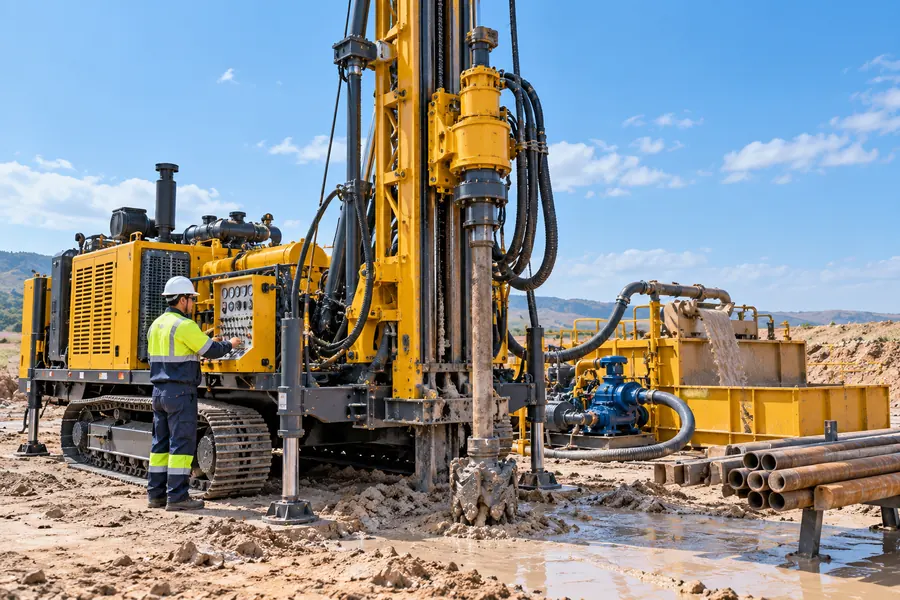
The main components of a rotary drilling rig include the mast, chassis, rotary head, drill string, drill bit, feed system, hoisting equipment, mud pump, circulation system, power unit, and control panel. These components work together to rotate the drill bit, apply drilling force, remove cuttings, and construct a stable borehole.
I believe understanding rotary drilling rig components is essential for selecting equipment and improving drilling performance. Each part performs a specific function, but the complete system must operate together to achieve reliable drilling results.
What Are the Main Components of a Rotary Drilling Rig?
A rotary drilling rig combines structural, mechanical, hydraulic, and electrical systems. Understanding the function of each component helps operators maintain drilling performance and identify potential equipment problems.
The main rotary drilling rig components include the mast, chassis, power system, rotary head, drill string, drill bit, hydraulic feed system, hoisting equipment, mud pump, and control system. The mast supports the drilling assembly, the rotary head provides rotation, and the circulation system removes cuttings from the borehole.
1. Mast and Drilling Structure
I consider the mast one of the most important structural components of a rotary drilling rig.
The mast supports the rotary head and guides the drilling assembly during operation.
It helps maintain the correct alignment between the drill string and the borehole.
A rigid mast is particularly important when drilling deep holes or working with heavy drill pipes.
The mast may also support hydraulic cylinders, feed mechanisms, lifting equipment, and drill pipe handling systems.
I normally evaluate mast height, structural capacity, feed stroke, and drilling angle adjustment when comparing drilling rigs.
Some rigs use telescopic masts to improve transportation flexibility.
2. Chassis and Stabilization System
The chassis supports the complete drilling machine.
I commonly see rotary drilling rigs mounted on crawler tracks, trucks, or trailers.
Crawler-mounted rigs are often suitable for rough terrain and construction sites.
Truck-mounted equipment may provide better road mobility between water well drilling locations.
Stabilizers or outriggers help support the rig and maintain its position during drilling.
I always consider ground conditions, machine weight, and stability requirements before selecting a chassis configuration.
3. Power System
The power system supplies energy to the drilling equipment.
Many mobile rotary rigs use diesel engines that drive hydraulic pumps.
Other machines use electric motors or combined power systems.
The power system may operate:
- Rotary head motors
- Hydraulic feeding cylinders
- Hoisting winches
- Traveling mechanisms
- Mud pumps
- Auxiliary drilling equipment
I consider engine power important, but it does not independently determine drilling performance.
The available rotary torque, feed force, hydraulic efficiency, and operating conditions must also be evaluated.
4. Hydraulic System
Hydraulic systems are widely used in modern rotary drilling rigs.
The system typically includes hydraulic pumps, motors, cylinders, valves, hoses, and oil reservoirs.
I consider hydraulic power useful because it allows controlled movement of the rotary head, feed system, mast, and other equipment.
Hydraulic pressure and flow must remain within the manufacturer's operating limits.
5. Control Panel and Monitoring Equipment
The control system allows operators to manage drilling functions.
Depending on the machine design, the control panel may display:
- Engine speed
- Hydraulic pressure
- Rotary speed
- Rotary torque or load indication
- Feed pressure
- Drilling depth
- Equipment alarms
- Operating temperature
I consider clear controls and accurate monitoring important for efficient operation.
Main Component Functions
| Component | Main Function |
|---|---|
| Mast | Supports and guides the drilling assembly |
| Chassis | Carries and positions the machine |
| Stabilizers | Maintain machine stability |
| Engine or electric motor | Supplies operating power |
| Hydraulic system | Controls rotation and mechanical movement |
| Rotary head | Rotates the drill string |
| Feed system | Applies controlled axial force |
| Hoisting equipment | Lifts and lowers drilling tools |
| Control panel | Manages and monitors drilling operations |
I believe these components form the foundation of a modern rotary drilling rig.
How Do the Rotary Head, Drill String, and Feed System Work?
The rotary head, drill string, drill bit, and feeding system perform the main drilling operation. Incorrect coordination between these components can reduce penetration and increase tool wear.
The rotary head produces torque to rotate the drill string, while the drill pipes transmit that torque to the drill bit. The feed system applies controlled downward force, allowing the bit to cut or break the formation. Hoisting equipment raises the drilling assembly when adding rods, changing tools, or recovering equipment.
1. Rotary Head and Top Drive
I consider the rotary head the main component responsible for drill string rotation.
Many modern water well drilling rigs use a hydraulic top-head drive.
The rotary head travels along the mast and rotates the drill string through a hydraulic motor and gearbox.
I normally evaluate two specifications:
Rotary Torque → The turning force available to rotate the drill string.
Rotation Speed → The number of revolutions per minute.
These values influence drilling performance under different geological conditions.
A machine may provide high torque at relatively low speed, while another configuration may prioritize faster rotation.
I do not assume maximum torque and maximum rotation speed are available simultaneously.
Large conventional rotary rigs may use a rotary table and kelly drive instead of a traveling top-head drive.
The two arrangements provide rotational power through different mechanical configurations.
2. Drill String and Drill Pipes
The drill string connects the surface rotation equipment with the drill bit.
It normally contains drill pipes, threaded connections, and any required bottom-hole tools.
The drill string performs several functions:
- Transmits rotary torque
- Transfers axial drilling force
- Provides a passage for drilling fluid or air
- Connects the drilling equipment with the bit
- Allows drilling to continue as additional pipes are installed
I consider drill pipe compatibility important when selecting equipment.
Drill pipe diameter, length, thread type, wall thickness, and allowable loads must match the machine configuration.
Damaged threads or incorrectly connected rods may lead to equipment failures.
3. Drill Bits and Cutting Tools
The drill bit breaks the underground formation.
Different geological conditions require different bit designs.
I normally evaluate:
Drag Bits: Can be suitable for selected soft formations.
Roller Cone Bits: Use rotating cones and cutting elements to crush or break formations.
PDC Bits: Use polycrystalline diamond compact cutters to shear suitable formations.
DTH Hammer Bits: Are used with pneumatic down-the-hole hammers when a compatible rig operates in DTH mode.
I choose the bit according to the rock or soil characteristics, drilling method, and required borehole diameter.
A high-performance rotary head cannot compensate for an unsuitable drill bit.
4. Hydraulic Feed System
The feed system moves the rotary head along the mast and applies axial force to the drill string.
I consider controlled feed force essential for maintaining stable contact between the bit and formation.
Too little force may reduce penetration.
Excessive force can overload the bit, drill string, or rotary equipment.
The correct force depends on the drilling method and equipment specifications.
5. Hoisting and Lifting System
The hoisting system raises and lowers drilling tools.
On smaller rigs, hydraulic cylinders, chains, or winches may provide lifting and feed movement.
Large conventional rotary rigs can use drawworks, drilling lines, crown blocks, traveling blocks, and hooks.
I consider lifting capacity particularly important for deeper drilling projects.
The hoisting system must safely handle the drill string, lifting tools, and other supported loads.
Rotary Drilling Component Comparison
| Component | Primary Function | Important Specification |
|---|---|---|
| Rotary head | Rotates the drill string | Torque and speed |
| Drill pipe | Transmits torque and drilling fluid | Diameter, length, and connection |
| Drill bit | Cuts or breaks the formation | Size and cutting design |
| Feed system | Controls axial drilling force | Feed force and stroke |
| Hoisting system | Raises and lowers tools | Rated lifting capacity |
| Pipe handling equipment | Supports rod connection and removal | Compatibility and safety features |
I believe these components determine much of the rig's mechanical drilling capability.
What Do the Mud Pump and Circulation System Do in Rotary Drilling?
Rotary drilling produces rock and soil cuttings that must be removed from the borehole. Without effective circulation, drilling tools may overheat, cuttings may accumulate, and borehole stability can deteriorate.
The mud pump and circulation system transport drilling fluid through the drill string and back to the surface. The fluid cools the bit, carries cuttings away, and can help stabilize the borehole. Mud tanks, hoses, separators, and solids-control equipment support continuous circulation and allow the drilling fluid to be reused when appropriate.
1. Mud Pump
I consider the mud pump one of the most important supporting components in conventional mud rotary drilling.
The pump sends drilling fluid through the drill string toward the drill bit.
The fluid exits through openings near the bit and returns to the surface through the annular space between the drill string and borehole wall.
The mud pump must provide sufficient flow and operating pressure for the drilling system.
I evaluate pump capacity according to borehole diameter, drill pipe dimensions, depth, and the required fluid circulation.
Insufficient circulation may cause poor cuttings removal and increase drilling problems.
2. Drilling Fluid and Mud System
Drilling fluid performs several important functions.
It helps cool and lubricate the bit.
It carries rock and soil cuttings to the surface.
Properly designed drilling fluids can also support borehole stability and help control formation-fluid entry.
I normally consider water-based drilling fluids for many water well and construction applications.
However, the correct drilling fluid depends on geological conditions and project requirements.
Different formations may need different fluid properties.
I would not use the same mud formulation for every drilling project.
3. Mud Tanks and Fluid Storage
Mud tanks store and circulate drilling fluid.
They may also provide space for mixing additives and allowing some suspended solids to settle.
I consider sufficient tank capacity important for maintaining circulation during drilling.
The tank arrangement must also support safe access, cleaning, and fluid handling.
Some smaller projects use suitable pits instead of fully enclosed tanks, where permitted.
4. Solids-Control Equipment
As drilling fluid returns to the surface, it carries cuttings from the formation.
Solids-control equipment removes unwanted particles before the fluid is recirculated.
Common components include:
Shale Shaker → Separates larger drill cuttings through vibrating screens.
Desander → Removes selected sand-sized particles.
Desilter → Removes finer suspended particles.
Mud Tank → Stores conditioned fluid for reuse.
I consider solids control important because excessive cuttings accumulation can affect drilling-fluid performance and increase component wear.
Not every water well rig requires the complete solids-control package used on large drilling projects.
5. Air Compressor for Air Rotary Drilling
I also distinguish mud rotary drilling from air rotary drilling.
Some rotary drilling rigs can use compressed air instead of liquid drilling fluid.
In air rotary drilling, compressed air passes through the drill string and carries cuttings toward the surface.
A compatible rig may also use a DTH hammer for pneumatic percussion drilling.
I evaluate air pressure and airflow according to the drilling method and selected tools.
An air compressor is not a mandatory component of every mud rotary drilling rig.
6. How the Circulation System Works
For conventional direct mud rotary drilling, the basic circulation path is:
Mud Tank → Mud Pump → Drill Pipe → Drill Bit → Borehole Annulus → Surface Return → Solids Control → Mud Tank
| Circulation Component | Main Function |
|---|---|
| Mud pump | Moves drilling fluid |
| Mud tank | Stores and conditions fluid |
| Hoses and piping | Deliver fluid between components |
| Drill pipe | Carries fluid toward the bit |
| Drill bit nozzles | Direct fluid at the drilling face |
| Borehole annulus | Returns fluid and cuttings upward |
| Solids-control equipment | Removes unwanted particles |
| Air compressor | Supplies air in compatible air drilling configurations |
I believe correct circulation equipment is as important as rotary torque and engine power.
How Do I Choose and Maintain the Right Rotary Drilling Rig Components?
A rotary drilling rig may have strong specifications but still perform poorly when its components are incorrectly matched. Equipment selection and maintenance directly influence reliability and drilling costs.
I choose rotary drilling rig components by evaluating drilling depth, borehole diameter, geological conditions, rotary torque, feed force, lifting capacity, and circulation requirements. I also compare hydraulic system reliability, chassis suitability, spare-parts availability, and maintenance costs. Proper inspection and servicing help reduce downtime and extend equipment life.
1. Confirm the Required Drilling Application
I begin by identifying the purpose of the drilling project.
Rotary drilling rigs may be used for water wells, geothermal installations, geological investigation, and construction work.
Different applications require different equipment.
For example, a water well project may need deeper drilling capability and suitable casing equipment.
A construction project may require a larger borehole diameter but a different drilling depth.
I therefore select equipment according to the complete project requirements.
2. Match the Rotary Head and Feed System
I compare rotary torque, rotation speed, feed force, and pullback capacity.
These specifications determine how effectively the rig can operate the drill string.
I do not choose equipment based only on engine power.
A powerful engine may not provide sufficient drilling performance if the rotary head or feed system is unsuitable.
3. Select the Appropriate Circulation Equipment
I also evaluate the mud pump, tanks, hoses, and solids-control arrangement.
For mud rotary drilling, I check required circulation flow, pump pressure, fluid properties, and borehole stability.
For air rotary or DTH configurations, I consider compressor pressure, airflow, and the requirements of the selected tools.
I prefer confirming the complete drilling package before requesting a final quotation.
4. Evaluate Maintenance Requirements
I believe preventive maintenance is essential for drilling rig reliability.
My inspection priorities include:
- Hydraulic pumps and motors
- Hydraulic oil and filters
- Rotary head bearings and gearbox
- Drill pipe connections
- Feed chains, cables, or cylinders
- Mast structural condition
- Hoisting equipment
- Mud pump components
- Hoses and pressure connections
- Cooling system
- Electrical controls and safety devices
I follow the manufacturer's approved inspection and service schedules.
5. Maintain Safe Drilling Operations
I also consider equipment safety an important part of component selection.
The machine must have suitable controls and protective equipment for its intended application.
Before drilling, trained operators should inspect the worksite, rig stability, mast, lifting equipment, and connections.
Personnel must remain clear of rotating drill strings, suspended loads, and moving equipment.
Before servicing hydraulic or pressurized systems, maintenance staff must isolate hazardous energy and release stored pressure according to approved procedures.
For large oil and gas drilling rigs, specialized well-control equipment may also be required.
This equipment is not automatically part of every small water well drilling rig.
6. Compare Total Drilling Costs
I prefer evaluating drilling equipment according to total ownership and operating costs.
My basic calculation is:
Drilling Cost per Meter = Total Drilling Operating Cost ÷ Completed Drilling Meters
The total cost may include fuel, labor, drill bits, fluid handling, maintenance, transport, equipment ownership, and downtime.
| Selection Factor | What I Evaluate |
|---|---|
| Drilling depth | Required working capacity |
| Hole diameter | Compatibility with drilling tools |
| Rotary head | Torque and rotation speed |
| Feed system | Axial force and stroke |
| Hoisting system | Safe lifting capacity |
| Mud pump | Flow and pressure requirements |
| Chassis | Terrain and transport conditions |
| Maintenance | Service requirements and spare parts |
| Safety | Equipment protection and operating procedures |
| Operating costs | Fuel, labor, consumables, and downtime |
I believe the best rotary drilling rig is the one whose components operate efficiently as a complete system.
My Insights: How Do the Components of a Rotary Drilling Rig Work Together?
I believe understanding the components of a rotary drilling rig is essential for selecting reliable equipment and improving drilling efficiency.
The machine should not be evaluated only by its engine power, rotary torque, or maximum drilling depth.
Each component performs a specific function, and the complete drilling system must operate together.
I summarize the main components through their practical roles:
Mast → Supports the drilling assembly and maintains alignment.
Chassis → Provides structural support, mobility, and positioning.
Power System → Supplies energy to the drilling equipment.
Hydraulic System → Controls drilling force, rotation, and mechanical movement.
Rotary Head → Generates torque and rotates the drill string.
Drill String → Transfers torque and drilling force toward the bit.
Drill Bit → Cuts or breaks the underground formation.
Feed System → Controls axial force and drilling movement.
Hoisting System → Raises and lowers drilling tools.
Mud Pump → Circulates drilling fluid through the borehole.
Solids-Control System → Removes cuttings from returning fluid.
Control System → Allows operators to monitor and adjust drilling functions.
My Practical Recommendation
I normally begin equipment selection by confirming the required drilling depth, hole diameter, and geological conditions.
I then evaluate the rotary head and feeding system.
For deeper drilling, I pay particular attention to lifting capacity and drill string handling.
For mud rotary applications, I check circulation performance and fluid management.
For rigs supporting DTH drilling, I also evaluate air compressor compatibility.
I believe buyers should avoid purchasing a drilling rig based only on its maximum specifications.
A machine may have sufficient engine power but still perform poorly if its drill bit, feed system, or circulation equipment is incorrectly selected.
I also consider maintenance and spare-parts support essential for long-term reliability.
For industrial equipment procurement, I prefer suppliers that provide complete specifications, inspection information, maintenance documentation, and clear delivery details.
My recommendation is to evaluate rotary drilling rig components as one integrated drilling system. Correct equipment matching, safe operation, and preventive maintenance provide the strongest foundation for efficient drilling and lower operating costs.
Conclusion
I believe rotary drilling rig performance depends on properly matched structural, rotary, feeding, hoisting, and circulation components. Correct selection and maintenance improve drilling efficiency and reliability.