
](https://kaishanpro.com/wp-content/uploads/2026/10/What-Are-the-Main-Components-of-a-Rotary-Drilling-Rig.webp)
A rotary drilling rig may look like one machine, but poor understanding of its individual systems can lead to incorrect specifications, inefficient drilling, and expensive maintenance.
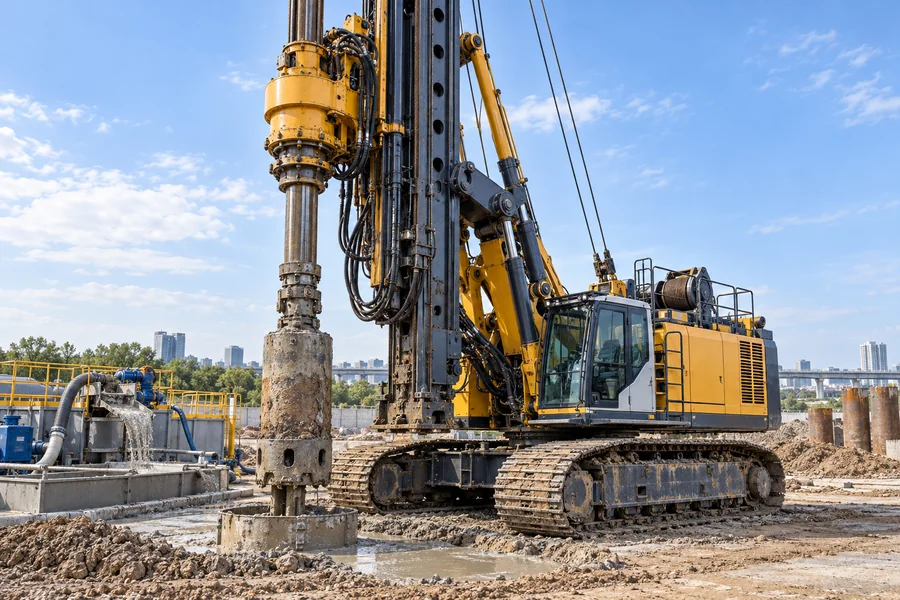
The main components of a rotary drilling rig are the power system, mast or tower, rotary drive, feed or pulldown system, drill string and tooling, hoisting system, circulation or flushing system, hydraulic system, undercarriage or carrier, and control system. Their exact design changes between mining, foundation, water-well, and oilfield drilling rigs.
I understand the rig as a complete energy-transfer and hole-making system rather than simply a rotary head mounted on a crawler.
What Are the Core Components of a Rotary Drilling Rig?
Traditional rotary drilling can be divided into power, hoisting, rotation, and circulation systems, but modern rigs combine these functions with hydraulics, electronic controls, mobility systems, and specialized tooling.
The core components are the power source, mast or tower, rotary drive, feed/pulldown mechanism, hoisting equipment, drill string, drilling tool, circulation system, hydraulic system, control system, and structural carrier. SLB similarly identifies power generation, hoisting, rotary equipment, drill string, pumps, mast, and auxiliary equipment as major rotary-rig components.
1. Power system
Every drilling function starts with power.
Depending on the rig, the primary source may be:
diesel engine
electric motor
or:
diesel-electric system
The power source drives systems such as:
hydraulic pumps
rotary head
winches
compressor
mud pumps
and:
crawler travel.
In a modern mining rotary rig, one diesel engine may power both the hydraulic system and onboard air compressor. Epiroc's Smart DM45, for example, uses a diesel engine to drive its compressor and hydraulic system.
For equipment selection, I do not compare engine horsepower alone.
I ask:
How effectively is that power converted into drilling torque, pulldown, airflow, hydraulic movement, and usable production?
2. Mast or tower
The mast provides the vertical structural framework for drilling.
It supports and guides components such as:
- Rotary head
- Feed carriage
- Drill pipe
- Kelly bar
- Winches
- Rod handling equipment
- Auxiliary lifting equipment
On a mining rig, it may be called a:
tower
On a foundation rig, it is often called a:
mast
or:
leader.
Its strength and geometry influence:
maximum drill-pipe length
single-pass depth
feed stroke
machine stability
and:
tool handling.
Modern foundation rigs can also tilt and position the mast for accurate hole alignment.
Liebherr's current LB rigs combine the leader with rotary drive, crowd system, winches, and parallel kinematics for foundation drilling.
3. Rotary drive or rotary head
The rotary head produces:
torque + rotational speed
and turns:
Kelly bar
drill pipe
auger
bucket
tricone bit
or other tooling.
This is one of the most important drilling components.
In foundation drilling, the rotary drive may produce hundreds of kNm of torque.
In mining rotary drilling, torque is combined with substantial weight on bit or pulldown.
Epiroc's Pit Viper 351, for example, combines a powerful rotary head with large bit load and onboard compressed-air capability for large mining blastholes.
The correct rotary head needs the right balance of:
torque + rpm
A high-torque, low-speed system serves a different application from a higher-speed drilling configuration.
4. Feed or pulldown system
Rotation alone is not enough to drill.
The bit must also be pushed into the formation.
The feed system provides:
downward force
and usually:
pullback force
for extracting the drilling assembly.
Depending on the rig, this may be called:
feed
crowd
pulldown
or:
pull-down system.
Mining rotary rigs rely heavily on pulldown to generate weight on bit.
Foundation rigs often use:
crowd cylinders
or:
crowd winches
to push the rotary drive and tooling into the ground.
Liebherr's current foundation systems use rope crowd systems, while its control systems can coordinate crowd and Kelly winches to increase extraction force.
5. Hoisting system
The hoisting system raises and lowers:
drill string
Kelly bar
tools
casing
or other drilling equipment.
Its main elements can include:
main winch
auxiliary winch
wire rope
sheaves
and:
lifting attachments.
In conventional oilfield rotary drilling, hoisting equipment performs one of the three essential rig functions alongside rotation and circulation.
On modern foundation rigs, the main winch frequently works with the Kelly bar.
An auxiliary winch may handle:
tools + casing accessories + site equipment.
6. Drill string
The drill string connects the rotary system to the cutting tool.
Depending on the application, it may consist of:
drill pipe
Kelly bar
drill collars
subs
or:
specialized adapters.
Its jobs include transmitting:
torque
feed
and, in many drilling methods:
air or drilling fluid.
The drill string therefore has both:
mechanical
and:
fluid-transfer
functions.
7. Drilling tool or bit
The drilling tool is the component that actually breaks or removes the formation.
Rotary rigs may use:
- Tricone bits
- PDC bits
- Drag bits
- Augers
- Drilling buckets
- Core barrels
- DTH hammers and bits
- Rock augers
- Reamers
The tool must match:
geology + hole diameter + drilling method + rotary torque + feed force.
The rig provides energy.
The tool applies that energy to the ground.
8. Circulation or flushing system
Drilling creates cuttings.
Those cuttings must leave the hole.
The circulation system may use:
compressed air
water
drilling mud
or another flushing medium.
SLB describes a conventional drilling-fluid circulation circuit as including the pumps, surface piping, drill string, bit nozzles, annulus, solids-control equipment, tanks, and return system.
For mining rotary blasthole drilling, an onboard compressor may provide the flushing air.
For water-well drilling, the rig may use:
air + mud pump
depending on the method.
Fraste's current water-well rigs can incorporate rotary heads, compressors, mud pumps, rod/casing systems, and other equipment according to drilling technique.
9. Hydraulic system
Modern mobile rotary rigs rely heavily on hydraulics.
Hydraulic power may operate:
rotary head
mast movement
feed system
winches
crawler tracks
clamps
rod handling
and:
leveling jacks.
The main hydraulic components include:
pumps + valves + motors + cylinders + filters + reservoir + hoses + cooling system.
Hydraulic efficiency and cleanliness have a direct effect on reliability.
A contaminated hydraulic system can cause problems across several drilling functions at once.
10. Undercarriage or carrier
The carrier supports the complete drilling machine.
Crawler-mounted rigs use:
tracks + rollers + drive motors + frame
to move across the jobsite.
Foundation rigs also rely on the undercarriage to provide a stable working platform for high drilling torque and extraction loads.
Liebherr emphasizes the relationship between robust undercarriages, high torque, crowd forces, and rig stability in its current foundation drilling platforms.
Truck-mounted water-well rigs use the vehicle chassis as the primary mobile carrier.
11. Operator cab and control system
The modern rig is increasingly controlled electronically.
The control system may monitor:
depth
torque
rotary speed
feed force
pressure
machine inclination
engine performance
and:
drilling parameters.
Epiroc's DM45/DM50 uses a driller's console for operational functions and can be equipped with its Rig Control System Lite for additional automation capability.
Modern foundation systems likewise use electronic assistance to coordinate rotary drive, crowd, Kelly operations, and drilling cycles.
How Do the Main Rotary Drilling Rig Components Work Together?
The important engineering question is not only what each component does, but how energy passes through the machine and how broken formation is removed.
A rotary rig works by converting engine or electrical power into hydraulic and mechanical energy. The rotary head turns the drill string while the feed system pushes the tool into the formation. The mast supports this movement, the hoisting system handles the string, and air or drilling fluid removes cuttings so the bit can continue drilling fresh material.
The energy path
I simplify the mechanical side as:
engine/motor → hydraulic/mechanical drive → rotary head → drill string → bit → formation
The feed side is:
hydraulics/winch → crowd or pulldown → drill string → bit load
And the cleaning side becomes:
compressor/pump → drill string → bit → annulus → surface
All three paths must work together.
Rotation breaks the formation
The rotary head turns the bit.
Depending on tooling:
tricone rollers crush rock
PDC cutters shear formation
augers cut and carry soil
buckets cut and collect material
and:
DTH systems add percussion at the bottom.
Rotary torque therefore needs to match the cutting mechanism.
Feed keeps the tool engaged
The drilling tool needs suitable contact with the bottom.
Too little feed can cause:
poor penetration
Too much can cause:
excessive bit load + tool wear + overload
Mining machines make this especially clear.
Epiroc's DM45/DM50 combines rotary/DTH capability with controlled pulldown and pullback, illustrating that rotary torque and axial force are designed together rather than independently.
Circulation clears the hole
The bit breaks the formation, but drilling can only continue efficiently if the broken material leaves.
In air drilling:
compressor → pipe → bit → cuttings up annulus
In mud rotary:
mud pump → drill string → bit → annulus → surface treatment → mud tank → pump
If circulation fails:
cuttings accumulate → torque rises → penetration falls → sticking risk increases.
Hoisting extends the hole
As drilling progresses, additional:
pipe
or:
Kelly extension
allows greater depth.
The hoisting system raises tooling when:
adding rods
changing bits
cleaning the hole
or:
removing the string.
This is why pullback and winch capacity can be just as important as rotary torque on deep drilling projects.
Controls coordinate everything
A modern rig operator is not separately controlling unrelated pieces of machinery.
The control system increasingly coordinates:
engine load + hydraulic demand + rotation + feed + air + machine positioning
to keep drilling stable.
Automation can further improve:
hole accuracy + repeatability + safety + data collection.
How Do Rotary Drilling Rig Components Differ by Application?
The fundamental functions remain similar, but component emphasis changes significantly between mining, foundation, water-well, and oilfield rotary drilling.
Mining rotary rigs emphasize tower strength, pulldown, rotary head, large compressors, pipe handling, and automation. Foundation rigs emphasize mast stability, rotary torque, Kelly systems, crowd mechanisms, and winches. Water-well rigs emphasize pullback, flexible rotary heads, compressors or mud pumps, pipe handling, and flushing systems. Oilfield rigs add large hoisting and mud-circulation systems.
Mining rotary blasthole rig
A typical mining rotary rig emphasizes:
large tower
rotary head
pulldown
drill pipe
air compressor
dust control
crawler carrier
and:
automation.
The Epiroc Pit Viper 351 is a good modern example: the machine combines high bit load, powerful rotary drive, large compressed-air capability, a large structural platform, and electronic rig controls.
For mining, the main performance questions are:
How much weight can I put on the bit?
How much air can I supply?
How quickly can I drill and change pipe?
Foundation rotary rig
A foundation rig looks different.
Its central components commonly include:
undercarriage
upper carriage
mast/leader
rotary drive
Kelly bar
crowd system
main winch
auxiliary winch
counterweight
and:
drilling tool.
Liebherr's current LB series combines rotary drive, Kelly equipment, winches, crowd systems, and robust leaders for Kelly, CFA, and double-rotary methods.
BAUER's recent description of the evolution of its rotary drilling rigs similarly highlights the mast, Kelly bar, hydraulics, and crowd system as central parts of foundation drilling equipment.
Water-well rotary rig
A water-well machine often needs more drilling-method flexibility.
Its key systems may include:
mast
rotary head
pullback/feed
drill pipe handling
compressor
mud pump
foam pump
and:
casing equipment.
Fraste's current MITO 25 can be equipped with different rotary heads, double-head systems, water/mud pumps, drill-pipe and casing loading systems, and winches for different formations and drilling methods.
This is why water-well rig specifications often emphasize:
pullback + torque + compressor/mud system + rod handling
more than enormous rotary torque alone.
Oilfield rotary rig
The conventional oilfield rotary rig expands the same basic principles onto a much larger structure.
SLB lists major components including:
mast/derrick
drawworks
rotary table or top drive
drill string
mud tanks
mud pumps
power generation
and:
auxiliary equipment.
The functions still remain:
hoist → rotate → circulate
but the scale and well-control requirements become much greater.
Application comparison
| Rig type | Components that become especially important |
|---|---|
| Mining rotary | Rotary head, pulldown, compressor, tower, automation |
| Foundation | Mast, rotary drive, Kelly, crowd system, winches |
| Water well | Rotary head, pullback, compressor/mud pump, rod handling |
| Geothermal | Deep pullback, air/fluid circulation, tooling system |
| Oil and gas | Derrick, drawworks, top drive, mud pumps, drill string |
| DTH-capable rotary rig | Compressor, hammer-compatible drill string, feed |
| CFA rig | Rotary drive, continuous auger, crowd, concrete system |
The basic machine architecture therefore changes according to what the hole must accomplish.
Which Rotary Drilling Rig Components Matter Most When Buying or Maintaining a Rig?
Buyers often focus on maximum torque and drilling depth, but reliability depends on several interconnected systems that may cost far more than expected when they fail.
When evaluating a rotary rig, I focus on the rotary head, feed/pullback system, mast, winches, hydraulics, power source, circulation system, drill-string handling, undercarriage, and controls. I compare rated capability with the actual hole and geology, then evaluate component quality, service access, spare-parts availability, monitoring, and maintenance requirements.
Rotary head
I check:
maximum torque
continuous usable torque
rpm range
gear reduction
bearing design
and:
serviceability.
A published maximum torque number does not tell me how the rotary drive performs across the entire rpm range.
Feed and pullback
For deep work, I check both:
push
and:
pull.
A machine may drill downward effectively but still struggle to retrieve:
heavy drill string + casing + stuck tooling.
This is particularly important in:
water wells
foundation drilling
and:
deep geotechnical work.
Mast structure
I inspect the mast for:
working height
feed stroke
tool compatibility
structural condition
guide wear
and:
transport configuration.
The mast must withstand drilling forces while maintaining alignment.
Hydraulic system
I ask for:
pump brand/specification
operating pressures
hydraulic oil requirements
filter intervals
cooling capacity
and:
diagnostic procedures.
On a modern hydraulic rig, many apparently unrelated faults can originate from hydraulic problems.
Winches and wire rope
Winch capacity affects:
tool handling + Kelly operation + extraction + safety.
I check:
line pull
rope condition
brakes
drum condition
and:
inspection requirements.
Compressor or mud pump
The circulation system must match the drilling method.
For rotary blastholes:
airflow and pressure
are critical.
For mud rotary:
pump pressure + flow
matter.
For multipurpose water-well rigs, I may need both.
Fraste's FS 300 T, for example, combines a rotary head with both a piston mud pump and onboard compressor capability for water-well applications.
Pipe and rod handling
Manual pipe handling increases:
labor + cycle time + exposure to hazards.
Modern rigs may use:
carousels
rod changers
automatic pipe handling
or:
bit-changing systems.
For high-production drilling, handling time directly affects:
meters per shift.
Control and automation system
Modern controls can help monitor:
depth
machine position
feed
rotary load
pressure
and:
equipment health.
I also consider whether the supplier can diagnose:
sensors + controllers + CAN systems + software
locally.
A machine with excellent mechanical hardware can still experience long downtime when electronic support is unavailable.
Undercarriage and structural frame
The rig must support all drilling reactions.
I check:
crawler condition
final drives
track tension
rollers
frame cracks
and:
machine stability.
For foundation drilling, the carrier has to resist significant torque and crowd reactions.
For mining rigs, it also needs reliable mobility across rough benches.
My insights: What Are the Main Components of a Rotary Drilling Rig
The simplest answer is a list of parts, but the better engineering answer is to understand the four functions every rotary rig must perform: create power, rotate and load the bit, handle the drill string, and remove cuttings.
The main components of a rotary drilling rig are the power source, mast, rotary drive, feed or pulldown system, hoisting system, drill string, drilling tool, circulation system, hydraulics, carrier, and controls. I evaluate them as one connected drilling system because the performance of the weakest component can limit the entire rig.
My first insight is to remember four fundamental systems
A useful classical framework is:
1. Power
Provides energy.
2. Hoisting/feed
Moves the drilling assembly vertically.
3. Rotation
Turns the bit.
4. Circulation
Removes cuttings.
SLB describes modern rotary well drilling around the same essential functions: hoisting the drill string, rotating the bit with suitable weight, and circulating drilling fluid to clean the hole.
Modern hydraulics and electronic controls support these fundamental systems.
My second insight is that the rotary head is only one part of drilling performance
Buyers often ask:
“How much torque does the rig have?”
Torque matters.
But the complete drilling result also depends on:
feed + tool + flushing + rig stability.
A powerful rotary head with insufficient circulation can:
break rock faster than the hole can clean itself.
A large compressor with insufficient bit load may also fail to deliver expected productivity.
My third insight is that different drilling methods rearrange the same functions
Mining rotary rig:
rotary head + pulldown + compressor
Foundation Kelly rig:
rotary drive + Kelly + crowd + winch
Water-well rig:
rotary head + pullback + compressor/mud pump + pipe handling
Oilfield rig:
top drive/rotary table + drawworks + mud circulation
The hardware changes, but the functional questions remain similar.
My fourth insight is that auxiliary systems increasingly determine productivity
I do not treat:
controls
rod handling
cooling
dust collection
or:
diagnostics
as minor accessories.
On a production rig, they affect:
cycle time + operator workload + safety + availability.
Epiroc's modern blasthole rigs integrate operator controls and optional automation directly into the drilling platform, while Liebherr uses assistance systems to coordinate rotary and crowd operations.
My fifth insight is to evaluate the components as a complete rotary drilling system
When someone asks me, “What are the main components of a rotary drilling rig?”, my practical breakdown is:
1. Power source
Creates usable machine energy.
2. Hydraulic system
Distributes power to drilling and machine functions.
3. Mast or tower
Supports and guides the drilling assembly.
4. Rotary head
Provides torque and rpm.
5. Feed/pulldown system
Applies controlled axial force.
6. Hoisting system
Raises and lowers tools and drill string.
7. Drill string or Kelly bar
Transfers torque, load, and often flushing medium.
8. Drill bit/tool
Actually cuts, crushes, or breaks the formation.
9. Circulation system
Removes cuttings using air, mud, water, or another medium.
10. Pipe/tool handling system
Adds and removes drilling components.
11. Undercarriage/carrier
Provides mobility and structural stability.
12. Cab and control system
Coordinates machine functions and monitors drilling.
My system map is:
power → hydraulics → rotary/feed → drill string → bit → formation
while:
compressor/pump → drill string → bit → annulus → cuttings removal
and:
mast + hoisting + carrier + controls
support and coordinate both processes.
That is why I do not choose a rotary drilling rig from:
maximum depth
or:
maximum torque
alone.
I start with:
application → drilling method → geology → hole diameter → depth
and then check whether every major rig component has enough capacity to perform its role.
For mining, this may put more emphasis on:
pulldown + compressor + pipe handling.
For foundation work:
rotary torque + crowd + Kelly + winches.
For water wells:
pullback + compressor/mud pump + drill-pipe handling.
The best drilling rig is therefore not the machine with the largest single specification.
It is the rig whose major components are correctly balanced for the hole it must drill.
Conclusion
A rotary drilling rig combines power, rotation, feed, hoisting, drill string, tooling, circulation, hydraulics, mobility, and controls into one coordinated hole-making system.