
](https://kaishanpro.com/wp-content/uploads/2026/10/What-is-Rotary-Drilling-Advantages-and-Applications.webp)
Drilling through soil and rock requires the right equipment and method. Poor drilling selection can increase fuel consumption, reduce penetration rates, and create expensive borehole problems.
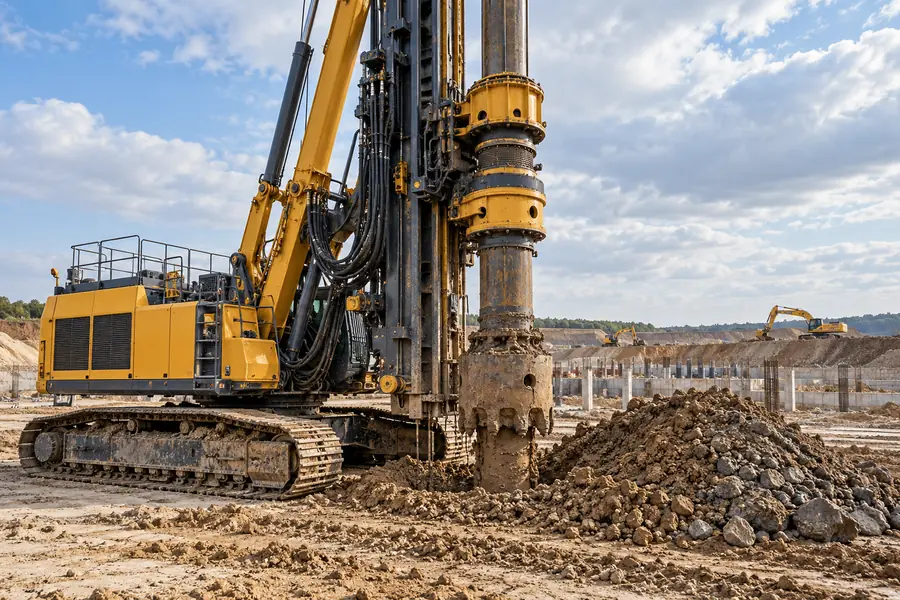
Rotary drilling is a method of creating boreholes by continuously rotating a drill bit while applying axial pressure to cut, crush, or excavate soil and rock. Drilling fluid, compressed air, or mechanical augers remove the cuttings. Its main advantages include versatility, efficient continuous drilling, broad diameter and depth capabilities, and suitability for many geological and industrial applications.
I consider rotary drilling one of the most adaptable drilling technologies because the equipment can be configured for different formations and project requirements.
How Does Rotary Drilling Work, and What Equipment Does It Use?
Rotary drilling uses continuous rotational motion and controlled axial force to advance a drilling tool into the ground. The cutting mechanism and cuttings-removal system depend on the formation.
A rotary drilling rig transfers torque and rotational speed through a rotary drive and drill string to a drill bit or excavation tool. Feed force or weight on bit keeps the tool engaged with the formation. As the bit cuts or crushes the material, compressed air, drilling fluid, or mechanical augers remove the cuttings from the borehole.
The basic rotary drilling principle
The drilling process can be simplified as:
Power source → rotary drive → drill string → drilling bit → formation
At the same time, the machine applies:
Axial force → drilling tool → cutting face
The tool then removes material through:
rotation + cutting/crushing action.
Schlumberger's SLB Energy Glossary defines rotary drilling around the continuous rotation of a drill bit to break rock, with cuttings removed by a circulating fluid.
Source: SLB — Rotary Drilling
This distinguishes pure rotary drilling from conventional percussion drilling.
In rotary drilling, the bit primarily breaks the formation through rotational cutting or crushing.
In DTH drilling, a downhole hammer delivers repeated impacts directly behind the bit.
Step 1: Position the drilling rig
The operator positions the rig at the planned borehole location.
Before drilling, the team checks:
ground stability
hole position
rig alignment
underground services
and:
working-platform conditions.
For a vertical borehole, correct rig alignment is important for controlling deviation.
For a directional borehole, the planned trajectory is part of the drilling setup.
Step 2: Apply rotary torque and feed force
The rotary head or top drive turns the drill string.
The drilling system applies axial force through:
feed cylinders
crowd mechanisms
or:
drill-string weight.
Three parameters are especially important:
Torque: The twisting force available to rotate the tool.
RPM: The rotational speed of the bit or drilling assembly.
Weight on bit (WOB): The axial load applied to the cutting structure.
The required balance depends on the bit and geology.
A large tricone bit and a small diamond coring bit require very different operating settings.
Step 3: Break or excavate the formation
The bit removes material using a mechanism suited to the ground.
Common tools include:
Tricone bits: Rolling cutters crush and fracture rock.
PDC bits: Fixed cutters shear suitable formations.
Drag bits: Cutting blades excavate appropriate softer formations.
Augers: Helical flights loosen and transport soil.
Drilling buckets: Excavate and temporarily contain material.
Core barrels: Cut a cylindrical section of rock or soil for retrieval.
The correct choice depends on:
formation hardness + abrasiveness + diameter + depth + drilling objective.
Step 4: Remove drilling cuttings
Cuttings must be removed efficiently to maintain penetration and avoid blockage.
In conventional mud rotary drilling, the typical flow is:
Mud pump → drill pipe → bit → borehole annulus → surface
The circulating fluid can:
carry cuttings
cool the bit
lubricate components
and:
help stabilize the borehole.
The U.S. Geological Survey describes this process in its technical documentation on mud rotary drilling.
Source: USGS — Well Drilling Procedures
Other methods use:
compressed air
reverse circulation
or:
mechanical auger flights.
Not every rotary drilling method uses mud.
Step 5: Extend the borehole
As drilling continues, the operator adds drill pipe or extends the drilling assembly when necessary.
Depending on the method, the rig may use:
automatic rod handling
Kelly bars
drill-pipe connections
or:
continuous augers.
For foundation drilling, a Kelly bar can telescope to reach significant depths without using the same pipe-handling arrangement as a water-well or oilfield rig.
Main components of a rotary drilling rig
| Component | Function |
|---|---|
| Power system | Supplies mechanical, hydraulic, or electrical energy |
| Mast or leader | Supports and guides drilling equipment |
| Rotary head/top drive | Provides rotational torque and speed |
| Feed or crowd system | Applies axial drilling force |
| Drill string/Kelly bar | Transfers torque and axial force |
| Drill bit or tool | Cuts, crushes, or excavates material |
| Hoisting system | Raises and lowers drilling equipment |
| Mud pump or compressor | Supports circulation and cuttings removal |
| Hydraulic system | Operates drilling and handling mechanisms |
| Undercarriage/carrier | Supports and transports the rig |
| Controls and sensors | Monitor drilling parameters and machine operation |
The specific arrangement changes between mining, foundation, water-well, and oilfield rigs.
What Are the Main Advantages and Limitations of Rotary Drilling?
Rotary drilling offers broad application flexibility, but its performance depends on the correct bit, drilling fluid, equipment capacity, and geological conditions.
The main advantages of rotary drilling are versatile tooling, efficient continuous cutting, suitability for many hole diameters and depths, effective cuttings removal, and compatibility with advanced drilling controls. Its limitations include high torque or pulldown requirements, drill-bit wear, fluid-management costs, borehole instability, and reduced efficiency when the chosen bit is unsuitable for the formation.
Advantage 1: Versatility across different geological formations
One of the strongest advantages is the ability to change drilling tools.
For example:
Soft soil → auger or suitable drag tool
Medium-hard rock → suitable rotary cutting bit
Harder rock → appropriately rated tricone or other rock-cutting system
Geological sampling → diamond core barrel
This flexibility allows rotary technology to serve a wide range of projects.
However, it does not mean every rotary bit is suitable for every rock type.
In highly competent, abrasive rock, DTH or another percussive method may achieve better results for certain hole sizes.
Advantage 2: Efficient continuous drilling
Many rotary systems remove cuttings while drilling continues.
This can reduce interruptions.
SLB notes that continuous rotation combined with circulating cuttings removal was a major efficiency advantage over historical cable-tool drilling.
Source: SLB — Rotary Drilling Definition
For deep wells, continuous circulation can be especially valuable because frequent removal of the entire tool assembly would consume considerable time.
However, some foundation rotary methods use buckets or augers that must be lifted periodically to discharge excavated material.
Therefore, continuous cuttings removal depends on the specific method.
Advantage 3: Wide hole-diameter capability
Rotary drilling supports very different hole sizes.
Examples include:
small-diameter exploration cores
medium-diameter water wells
large mining blastholes
and:
large-diameter foundation piles.
The equipment is not interchangeable across these categories.
A small core-drilling rig does not have the torque or crowd capacity needed for a large foundation pile.
Likewise, a large foundation rig is not automatically appropriate for deep mineral exploration.
Advantage 4: Deep-drilling capability
Rotary drilling is widely used for deep boreholes.
Oil and gas drilling is one of the clearest examples.
As the hole advances, drill pipe is added to extend the drill string.
The drilling fluid continues circulating through the system.
Modern oilfield rigs may use a top drive to rotate the drill string instead of a conventional Kelly and rotary table.
SLB identifies top-drive technology as an important development for drilling longer stands of pipe and complex extended-reach wells.
Source: SLB — Top Drive
Actual depth capability depends on:
rig capacity + drill string + circulation + formation + well design.
Advantage 5: Controlled drilling parameters
Modern rotary rigs can monitor:
torque
RPM
feed force
depth
inclination
and:
drilling pressure.
This can improve operating consistency and support drilling-data collection.
However, accurate hole placement still depends on:
site preparation + alignment + proper tooling + ground conditions + operator procedures.
Automation does not eliminate the need for correct drilling engineering.
Advantage 6: Compatibility with specialized drilling methods
Rotary technology supports several distinct methods.
Examples include:
Kelly drilling
Continuous Flight Auger (CFA)
Direct mud rotary
Reverse circulation
Diamond core drilling
and:
Oilfield rotary drilling.
This makes it possible to choose a method based on the final result required.
Limitations of rotary drilling
Rotary drilling also introduces several challenges.
High equipment loads
Large drilling diameters may require substantial torque and axial force.
Tool wear
Hard and abrasive formations can shorten bit life.
Fluid management
Mud drilling requires appropriate fluid circulation, treatment, containment, and disposal.
Hole instability
Unstable soils or groundwater may require casing, fluid support, or another stabilization method.
Deviation and tool sticking
Incorrect operating parameters, geological changes, or poor hole cleaning can create drilling difficulties.
Site constraints
Heavy rigs require suitable working platforms, transport access, and safe clearance.
NIOSH specifically identifies inadequate working platforms and poor ground support as significant contributors to overturning incidents involving foundation drilling rigs.
Source: NIOSH — Drill Rig Overturn Prevention
Advantages and limitations summary
| Factor | Potential advantage | Main limitation |
|---|---|---|
| Geological adaptability | Different bits and methods available | Wrong bit can reduce performance |
| Productivity | Continuous drilling possible | Depends on cuttings removal and geology |
| Diameter | Broad available range | Large holes need more torque and force |
| Depth | Suitable for deep drilling systems | Greater string, hoisting, and circulation demands |
| Hole quality | Can use guidance and monitoring | Deviation and instability remain possible |
| Cuttings removal | Air, mud, RC, or auger options | Fluid handling or disposal may be required |
| Automation | Supports repeatable operation | Higher complexity and training needs |
| Operating cost | Can be efficient in suitable applications | Bit wear, energy, and downtime vary |
I therefore evaluate rotary drilling performance through cost per accepted drilled meter, not a general claim that it is always the fastest method.
Where Is Rotary Drilling Used in Mining, Construction, and Industry?
Rotary drilling is used in many industries because its cutting tools and drilling systems can be adapted to different hole purposes.
Major rotary drilling applications include surface mining blastholes, foundation piles, water wells, oil and gas wells, mineral exploration, geotechnical investigation, and certain underground utility installations. Each application requires different drilling equipment, circulation methods, hole sizes, and performance criteria.
1. Mining and quarrying
Main application: Production blastholes
Rotary blasthole drilling is widely used in:
open-pit mining
limestone quarries
aggregate production
and:
large-scale rock excavation.
A rotary blasthole rig uses a suitable bit, often a tricone, to cut or crush the formation.
The bit requires:
torque + rotation + weight on bit.
Compressed air or another appropriate flushing medium carries cuttings out of the borehole.
Epiroc's DML rig illustrates a multipurpose surface platform supporting both rotary tricone and DTH drilling for approximately 150–270 mm holes, depending on configuration.
Source: Epiroc — DML Rotary Blasthole Rig
This example is important because:
Rotary tricone and DTH are different drilling mechanisms, even when the same rig platform supports both.
For mining projects, I compare:
meters per shift
hole deviation
bit consumption
fuel per meter
and:
blast-hole quality.
2. Foundation construction
Main application: Bored piles and ground-support structures
Foundation rotary drilling is used in:
bridges
high-rise buildings
industrial facilities
retaining structures
and:
transportation infrastructure.
Common rotary foundation methods include:
Kelly drilling
CFA drilling
Full displacement drilling
and:
Double rotary drilling.
Kelly drilling
A telescopic Kelly bar transfers torque to an auger, bucket, or core barrel.
The technique is commonly used for large-diameter bored piles.
Liebherr describes Kelly drilling as suitable for many soil and rock conditions, with casing required where ground stability or groundwater conditions demand it.
Source: Liebherr — Kelly Drilling
Continuous Flight Auger drilling
CFA uses a continuous helical auger.
The auger rotates into the formation while its flights carry material upward.
For cast-in-place piles, concrete is pumped through the hollow stem as the auger is withdrawn.
Source: Liebherr — Continuous Flight Auger Drilling
Double rotary drilling
Double rotary systems combine an internal auger with a rotating casing.
This can be useful for supporting the excavation during certain pile-construction methods.
Source: Liebherr — Double Rotary Drilling
I choose among these methods according to:
soil conditions + groundwater + pile diameter + pile depth + spoil-management requirements.
3. Water-well drilling
Main application: Accessing underground water
Water-well rotary rigs are used for:
agricultural irrigation
municipal water supply
industrial water
and:
domestic wells.
Common methods include:
direct mud rotary
air rotary
and:
reverse circulation.
Mud rotary can be particularly useful in unconsolidated soils because correctly designed drilling fluid helps support the borehole walls.
The U.S. Geological Survey documents the use of mud rotary drilling in deep groundwater wells through unconsolidated or loosely consolidated sediment.
Source: USGS — Mud Rotary Well Drilling
For hard-rock water wells, a rotary-capable rig may also be fitted for DTH drilling.
However, DTH is a rotary-percussive method, not the same as pure rotary cutting.
I evaluate water-well rigs through:
depth + casing capacity + pullback + circulation + geological conditions.
4. Oil and gas exploration
Main application: Drilling deep petroleum and natural-gas wells
Rotary drilling has a central role in oil and gas operations.
The system typically includes:
mast or derrick
top drive or rotary table
drill string
drill bit
mud pumps
and:
well-control equipment.
The drilling fluid removes cuttings and contributes to wellbore pressure management.
SLB explains that mud circulation is important for cooling the bit, transporting cuttings, and controlling formation pressure within the drilling program.
Source: SLB — Defining Drilling
Modern wells may include:
vertical sections
deviated sections
and:
horizontal sections.
These applications require sophisticated well planning, fluid systems, and safety controls.
5. Mineral and geological exploration
Main application: Recovering geological information
Rotary drilling is also used to investigate mineral resources and subsurface formations.
Diamond core drilling is an important example.
A diamond coring bit cuts an annular path through rock and leaves a cylindrical core for sampling.
Wireline systems can retrieve the core without removing the entire drill string.
Boart Longyear offers purpose-built surface and underground diamond core drilling rigs for this work.
Source: Boart Longyear — Surface Exploration Drilling
For mineral exploration, the final objective is not simply:
meters drilled.
It is also:
sample recovery + geological information + core quality.
6. Geotechnical and environmental investigation
Geotechnical drilling supports:
soil investigation
groundwater monitoring
construction-site assessment
and:
environmental studies.
Rotary rigs may use:
augers
core barrels
mud circulation
or:
air circulation.
The method is chosen according to the required samples, geological conditions, and environmental constraints.
Sampling accuracy and borehole condition can be more important than maximum drilling speed.
7. Horizontal directional drilling
Main application: Underground utility installation
Horizontal directional drilling (HDD) uses a rotating and steerable drilling system to install underground utilities.
Applications include:
water pipes
gas pipelines
fiber-optic cables
and:
electrical conduits.
The typical process involves:
pilot bore → reaming → pipe pullback.
HDD is a specialized directional technique, not simply vertical rotary drilling turned sideways. Steering methods and cutting mechanisms vary with geology and machine design.
Application comparison
| Industry | Rotary drilling application | Important equipment requirement |
|---|---|---|
| Mining | Production blastholes | Torque, WOB, flushing |
| Quarrying | Rock excavation and blasting | Bit selection, production rate |
| Construction | Bored piles | Torque, crowd, casing |
| Water supply | Water wells | Depth, mud/air circulation, pullback |
| Oil and gas | Deep wells | Hoisting, top drive, mud, well control |
| Mineral exploration | Diamond core drilling | Rotation control, core recovery |
| Geotechnical | Soil and rock investigation | Sampling quality and versatility |
| Utilities | Directional boreholes | Steering, thrust, pullback |
The same term rotary drilling therefore describes several equipment families rather than one universal drilling machine.
How Do I Choose the Right Rotary Drilling Method and Rig?
Choosing the right rotary drilling system requires more than matching engine power and maximum depth. The selection must account for the intended borehole and geological conditions.
I select a rotary drilling method by defining the application, hole diameter, required depth, ground conditions, cuttings-removal method, torque, RPM, axial force, and circulation system. I then evaluate rig mobility, hole stability, tooling costs, safety requirements, service support, and productivity to identify the lowest practical cost per completed borehole.
Start with the drilling objective
I first ask:
What is the hole for?
Examples include:
Blasting: Correct diameter, depth, and hole positioning.
Foundation: Suitable pile geometry and excavation stability.
Water well: Access to the required aquifer and reliable casing installation.
Exploration: Representative geological samples.
Oil and gas: A planned wellbore trajectory and safe pressure control.
Different project objectives require different drilling methods.
Understand the geology
I examine:
soil type
rock strength
abrasiveness
fractures
groundwater
and:
unstable formations.
For example:
Unconsolidated sediment: Consider mud rotary, suitable casing systems, or another stabilizing method.
Competent rock: Evaluate tricone, appropriate rotary cutting, or DTH.
Sampling-focused rock exploration: Evaluate diamond coring.
Foundation soils: Compare Kelly, CFA, displacement, and double rotary techniques.
The best method depends on the actual ground.
Compare torque and rotational speed
Torque is especially important for:
large-diameter cutting tools
augers
and:
demanding formations.
RPM is important for matching the cutting action to the bit.
A large foundation bucket and a diamond core bit operate under very different combinations of torque and speed.
I therefore request an appropriate:
torque-speed performance range
rather than only the maximum torque value.
Check axial force
Rotary drilling requires adequate tool loading.
Depending on the application, this may be called:
weight on bit
feed force
crowd force
or:
pulldown.
Insufficient force can reduce penetration.
Excessive force can overload tools, increase vibration, or damage the drilling assembly.
I follow the bit and rig manufacturer's operating recommendations.
Select the circulation system
Cuttings-removal performance is critical.
Possible systems include:
mud pump
air compressor
reverse circulation
and:
mechanical augers.
Each method changes:
equipment cost
energy consumption
borehole stability
and:
site logistics.
I size the circulation system according to the hole and tool, not only the rig's advertised maximum capacity.
Check depth and drill-string handling
Maximum rated depth should never be considered alone.
I verify:
hole diameter
drill-pipe dimensions
hoisting or pullback capacity
geology
and:
drilling method.
For deep wells, drill-string handling and retrieval capability can be decisive.
For foundation piles, crowd force and the Kelly system may be more relevant.
Evaluate stability and safety
Rotary drilling rigs can combine:
heavy masts
high torque
hydraulic systems
suspended loads
and:
rotating tooling.
Before operation, the project must address:
working-platform stability
overhead and underground utilities
personnel exclusion zones
safe lifting
guarding
and:
hazardous-energy isolation.
These requirements are part of the drilling method's real operating cost and feasibility.
Compare cost per meter or completed hole
A useful comparison includes:
machine cost
fuel or electricity
bits and drilling tools
drill pipe
circulation consumables
labor
maintenance
downtime.
For a production hole, I calculate:
Cost per accepted drilled meter = Total drilling cost ÷ Accepted drilled meters
For foundation and water-well projects, I may also compare:
cost per completed pile
or:
cost per finished well.
The cheapest machine is not always the lowest-cost drilling solution.
Rotary method selection guide
| Project requirement | Method to evaluate first |
|---|---|
| Large mining blastholes | Rotary tricone |
| Large-diameter bored piles | Kelly rotary drilling |
| Suitable cast-in-place piling soils | CFA |
| Piles with casing requirements | Kelly with casing or double rotary |
| Water wells in unconsolidated ground | Mud rotary |
| Large-diameter water wells in suitable geology | Reverse circulation |
| Deep hard-rock water wells | DTH as rotary-percussive alternative |
| Mineral core recovery | Diamond core drilling |
| Deep oil and gas wells | Oilfield rotary drilling |
| Underground utility crossings | HDD |
My final selection rule is:
Choose the drilling method from the geological and project requirements, then choose the rig that can operate that method effectively.
My insights: What is Rotary Drilling-Advantages and Applications
Rotary drilling is best understood as a family of drilling methods based on rotational cutting and controlled axial force, rather than as one universal machine or one guaranteed productivity advantage.
Rotary drilling creates boreholes using continuous tool rotation and axial force, with cuttings removed by drilling fluids, compressed air, or mechanical excavation. Its advantages include adaptable tooling, wide application coverage, efficient drilling in suitable formations, and advanced operating control. Its main applications include mining, foundations, water wells, oil and gas, exploration, and underground construction.
My first insight: Rotary drilling is a method, not a single rig type
I distinguish:
drilling method
from:
drilling machine.
A surface mining rig and a foundation piling rig may both use rotary drilling, but they are designed around different hole requirements.
One may need:
large tricone bit + pulldown + air flushing.
The other may need:
Kelly bar + high torque + bucket + casing.
This prevents buyers from comparing incompatible equipment.
My second insight: The main advantage is adaptability
For me, rotary drilling's most important advantage is its versatility.
By changing:
bit type
rotational parameters
circulation method
and:
support equipment
the technology can operate in very different formations and industries.
However, adaptability does not eliminate engineering limits.
A rig must have enough torque, force, and circulation capacity for the selected tool.
My third insight: Rotary drilling is not always better than DTH or Top Hammer
This distinction matters for commercial buyers.
Pure rotary drilling relies mainly on rotational cutting or crushing.
DTH drilling uses a percussion hammer behind the bit, combined with rotation.
Top hammer drilling transfers percussion energy through the drill string, also with rotation.
For some hard-rock production holes, percussion may provide better drilling economics.
For some large blastholes or suitable formations, rotary tricone drilling may be attractive.
I compare:
penetration rate + bit life + flushing + hole quality + cost per meter
before choosing.
My fourth insight: Cuttings removal and ground stability determine real productivity
A powerful rotary drive cannot compensate for poor hole cleaning.
If cuttings accumulate, drilling efficiency falls.
If the borehole becomes unstable, the project may require:
casing
better fluid control
or:
another drilling method.
I therefore evaluate:
rotary cutting + circulation + borehole stability
as one integrated process.
My fifth insight: What is Rotary Drilling? Advantages and Applications
My practical answer is that rotary drilling is a versatile drilling method whose value depends on matching the rig and cutting system to the required hole.
When selecting a system, I follow this sequence:
1. Define the application.
Mining, foundation, water well, oilfield, or exploration?
2. Confirm the required hole diameter.
Use the finished-hole specification.
3. Confirm depth.
Include the normal and maximum operating range.
4. Study the formation.
Soil strength, rock hardness, abrasiveness, water, and fractures.
5. Select the drilling method.
Tricone rotary, Kelly, CFA, mud rotary, RC, or coring?
6. Select the bit or excavation tool.
Match the tool to the formation.
7. Check torque and RPM.
Verify performance across the required operating range.
8. Check axial force.
Confirm feed, crowd, WOB, or pulldown capability.
9. Select the cuttings-removal system.
Mud, air, reverse circulation, or mechanical removal.
10. Check hole stability.
Will casing or fluid support be required?
11. Check drill-string handling and retrieval.
Especially for deeper boreholes.
12. Review site conditions.
Transport, ground stability, access, and safety.
13. Verify maintenance and local support.
Tool availability, parts, and service capability.
14. Compare productivity.
Use realistic drilling conditions.
15. Calculate total drilling cost.
Compare cost per accepted meter or completed hole.
My final recommendation
| Buyer priority | My recommended starting point |
|---|---|
| High-volume mining blastholes | Evaluate rotary tricone systems |
| Large foundation piles | Evaluate Kelly rotary rigs |
| Efficient piling in suitable soils | Evaluate CFA |
| Unstable foundation ground | Evaluate casing-assisted methods |
| Water wells in loose formations | Evaluate mud rotary |
| Large water production wells | Evaluate suitable reverse circulation |
| Hard-rock water wells | Compare DTH with other suitable methods |
| Geological core samples | Evaluate diamond coring |
| Deep petroleum drilling | Evaluate oilfield rotary systems |
| Utility installation | Evaluate HDD |
The most important principle is:
Rotary drilling is not automatically the best method for every project, but it is one of the most adaptable drilling approaches when the equipment is correctly matched to the geology and final borehole requirements.
I judge success by:
hole quality + drilling productivity + safe operation + total project cost.
Conclusion
Rotary drilling uses continuous rotation to excavate soil and rock. Its versatility supports mining, foundations, wells, and exploration, but successful drilling depends on the right equipment and geology.